Kobe was a day trip from Osaka on September 17, but for me it was something much larger than a day trip. It was a return, after forty years, to the city that was home in 1987.
In January of that year I was working in the turbo-generator research and development department of Mitsubishi Electric, in Kobe. At 8:40 exactly, a bell rang for the start of the workday. About fifty people stood up at once, turned toward their director, stood at attention and bowed deeply, while the words "Ohayo gozaimasu" came from every mouth. It was the official good morning, from everyone to everyone in the office.
Everyone wore the same khaki shirts and the same khaki jackets, with the company emblem sewn above the left breast pocket. They were all engineers, mechanical and electrical. I wore the same jacket, and the same emblem was sewn above my pocket. I was also impossible to miss. At one meter eighty-two and blond, I could not hide the differences. I was a foreigner. I was gaijin.
Η ώρα είναι 8:40 ακριβώς. Ο ήχος του κουδουνιού σημαίνει την έναρξη εργασίας στο γραφείο. Αμέσως, όλοι στο γραφείο, πενήντα περίπου άτομα, σηκώνονται όρθιοι και στρέφονται προς το μέρος του διευθυντού τους. Στέκονται σε στάση προσοχής και μετά υποκλίνονται βαθειά, ενώ ο ήχος "Οχάιο Γκοζαϊμάς" βγαίνει από τα στόματα όλων.
Είναι η καθιερωμένη, επίσημη καλημέρα από όλους σε όλους στο γραφείο.
Ανάμεσά τους εγώ. φορώ το ίδιο μπουφάν, το ίδιο σήμα είναι ραμμένο πάνω απ' την αριστερή τσέπη του στήθους μου. Είμαι όμως διαφορετικός. Ψηλός, ένα και ογδόντα δύο, ξανθός, αδύνατο να κρύψω τις διαφορές μου. Είμαι ξένος, είμαι "γκαιτζίν".
After the official good morning, each person sat down at a small metal desk and a small metal chair, and the work began. Each of us devoted himself to his own task, and I to mine. However many times I lifted my head to look around the room, my colleagues were still working. They did not stop except when the official break arrived. They did not get up from their seats except when they had to. They did not speak except about the work.
At 5:25 in the afternoon the bell rang for the end of the day. I left at five-thirty. Nobody followed me. My colleagues would work late into the evening, as they did every day. Some until nine, some until ten, some until eleven. They were the heart of the machine called Japanese industry, the famous salarymen. One of them would later become president and CEO of Mitsubishi Electric.
I worked with them and lived in their country for a year, and it was a wonderful year for me and my family: work, friendships, travel, adventures, sushi and sake. My older daughter Evi was two years old when we went. Japan was, and always will be, one of the countries I love most in the world. I always wanted to go back, and until this trip I never had. These days, after forty years, I had the great joy of being again in the places I truly loved. We had started in Tokyo, and we would leave from Osaka. And on September 17, I would finally see my old haunts again.
Back in Kobe
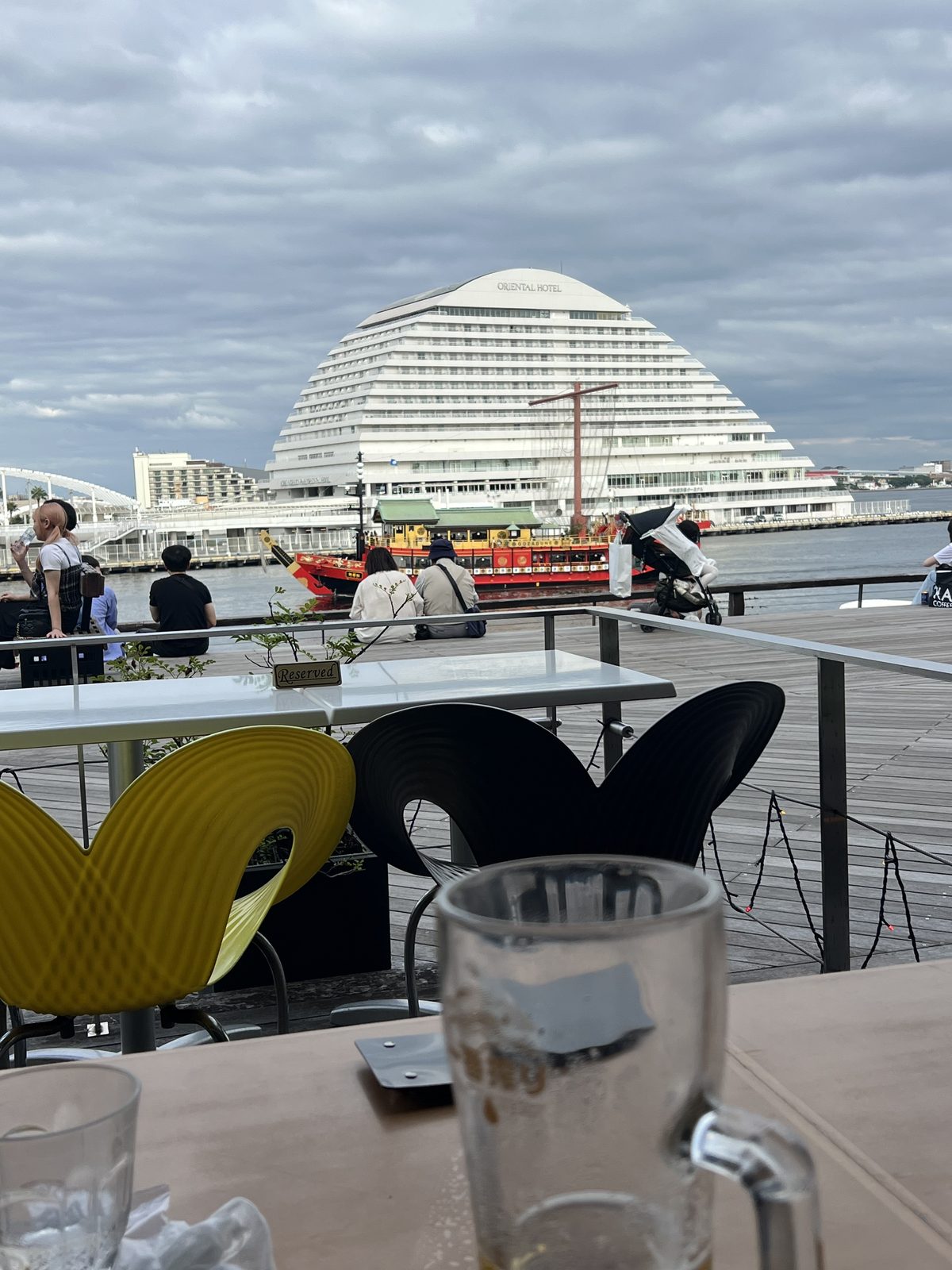
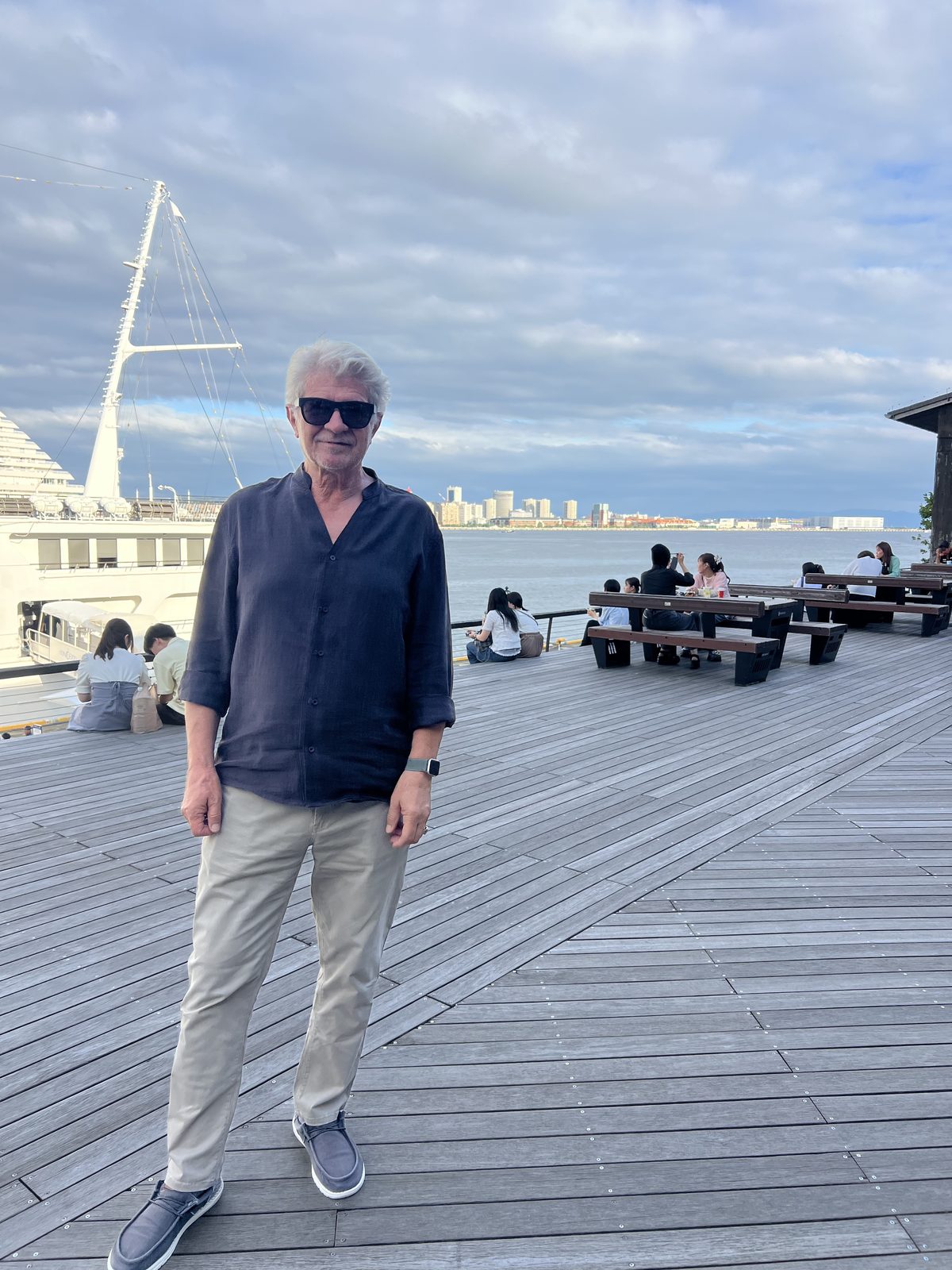
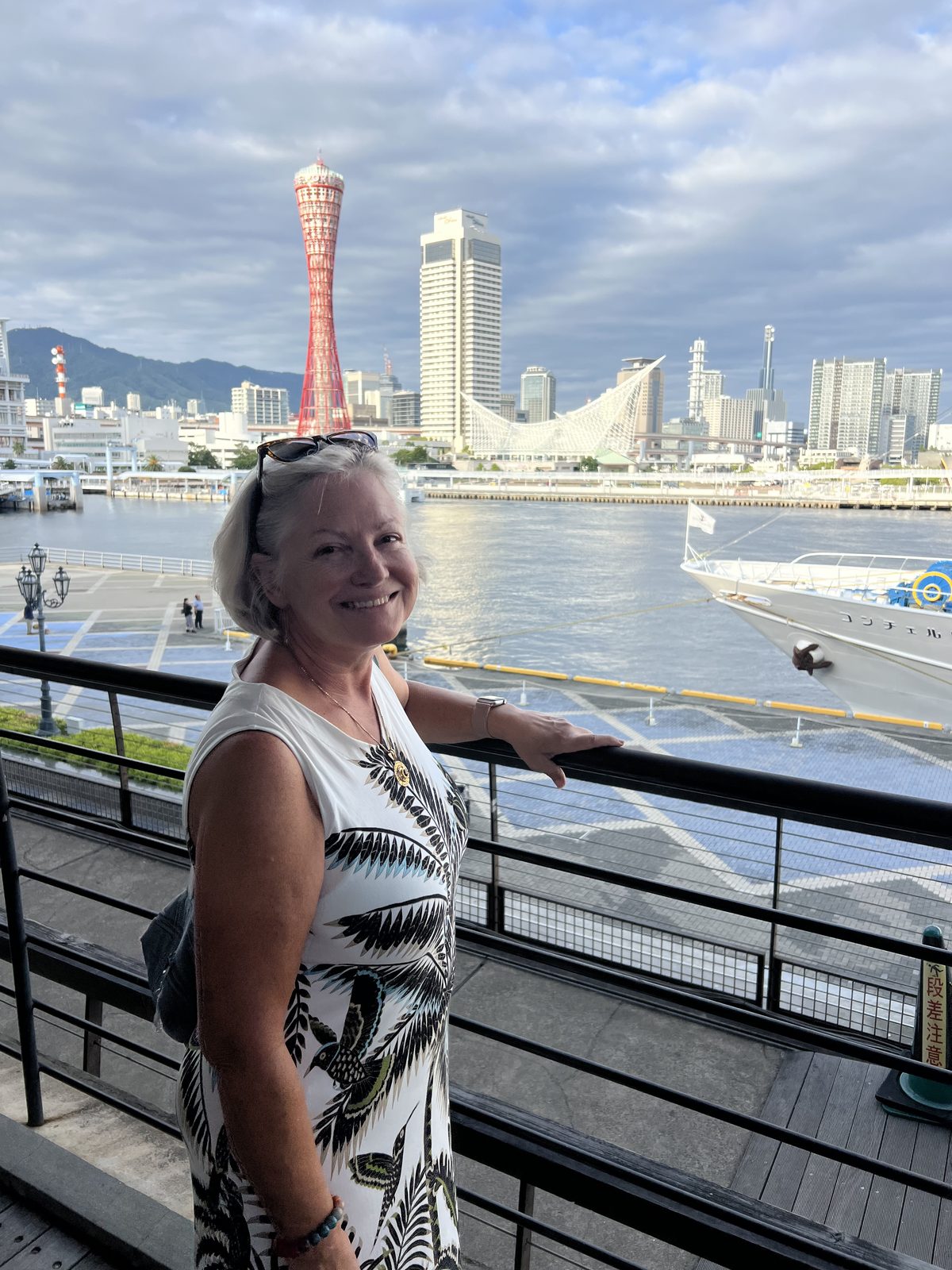
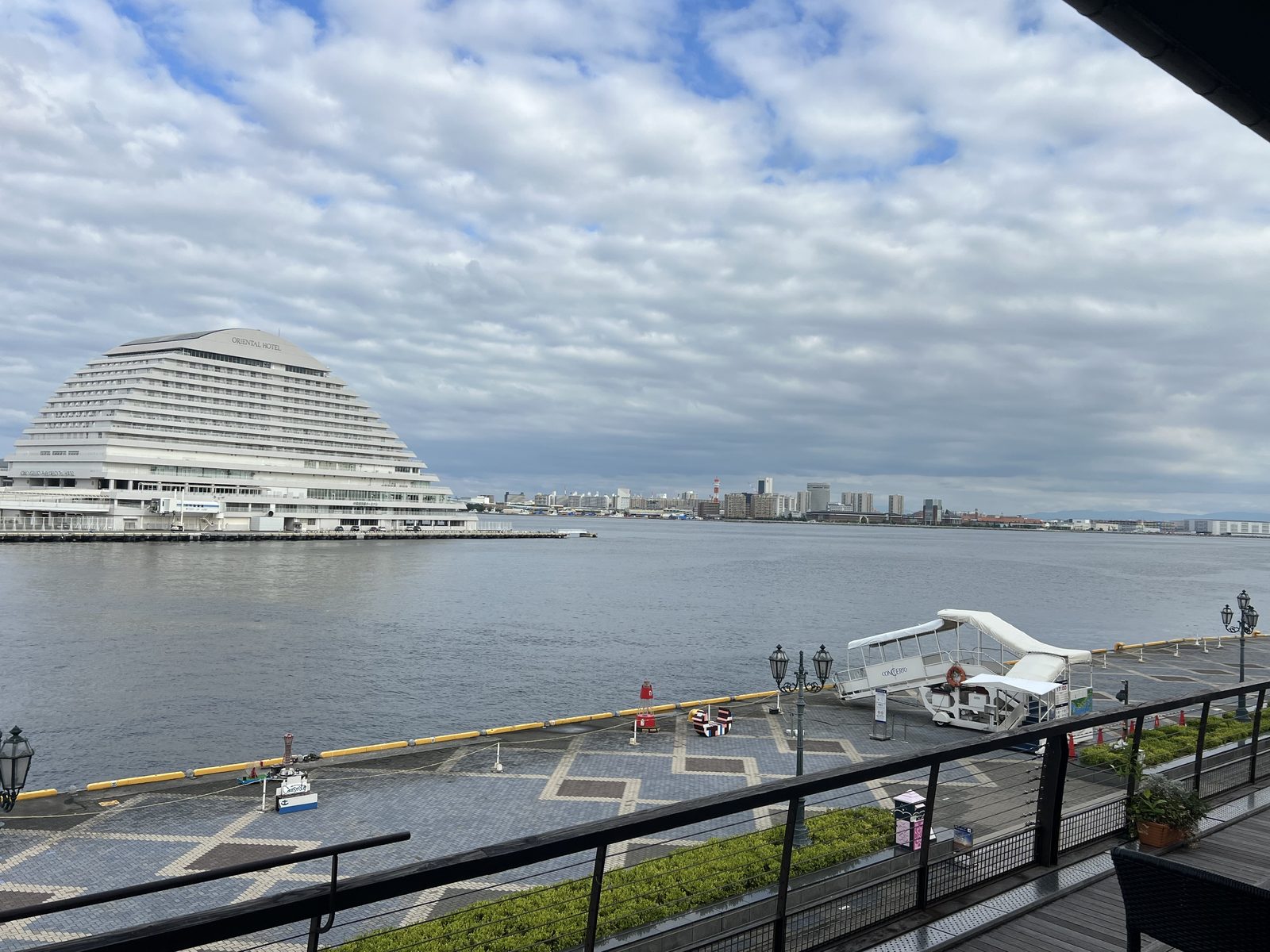
We walked the old neighborhoods that were home for a year, and also the newer parts of the city, which have grown in spectacular ways. We found the Lions Mansion, the first house my little family and I lived in, and the hotel where we stayed for a month or so when we first arrived. There was a second house too, which we did not find that day. Then we spent the afternoon at the harbor in Meriken Park, with the bright red Kobe Port Tower across the water, a big white hotel curving along the far shore, and a wide wooden boardwalk to stroll on. We found a table with a view and a beer, which seemed like the right way to start.
Στο Κόμπε ξανά, μετά από 40 χρόνια περίπου.
And of course the walk ended at Mouriya Honten, where we had a 5:30 reservation for the A5 rib loin course, and for what I will gladly call the best Kobe beef steak in the world. The restaurant has been there since 1885, the great-great-grandfather of hibachi joints, and it is very serious business. There was no beating-heart rice trick. In fact there was no rice. And, to Leigh Ann's great disappointment, there was no sliced onion volcano. The steak, though, was so good it literally melted in the mouth. Her favorite thing was the garlic: she had never seen such attention to detail in the sauté, and at the end the slices were crispy thin wafers of incredibleness. Ten stars, she wrote. We would do it again. We were having the time of our lives.
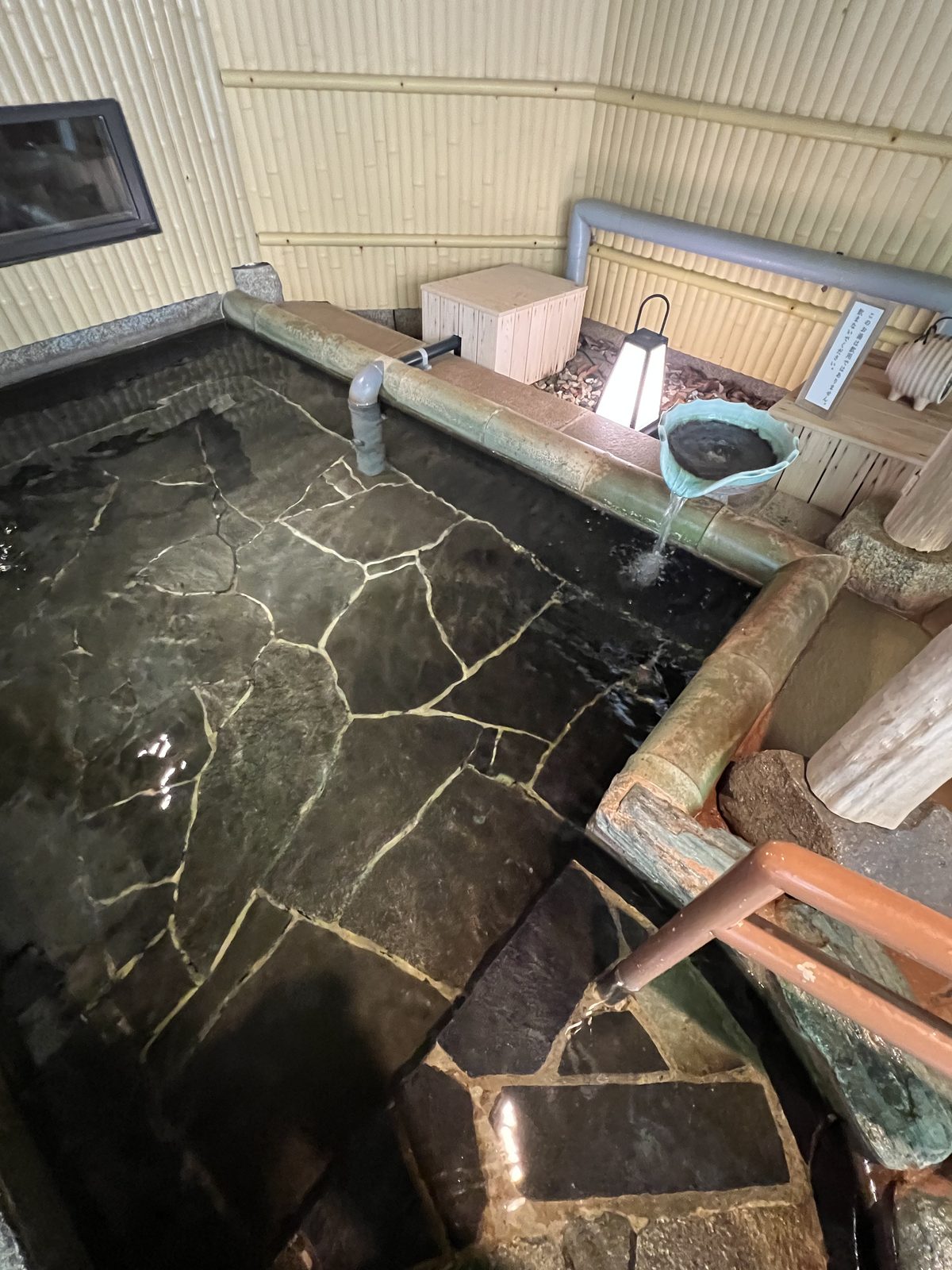
On September 18 we moved up into the hills to Arima Onsen, one of Japan's oldest hot-spring towns, and checked into the Taketoritei Maruyama ryokan. The ryokan runs a free shuttle from the station, which is handy when you're carrying bags up a hill. We had a relaxing weekend at the loveliest hot-springs hotel. We didn't do much of anything except soak in various tubs of hot water and eat the prettiest meals for two whole days.
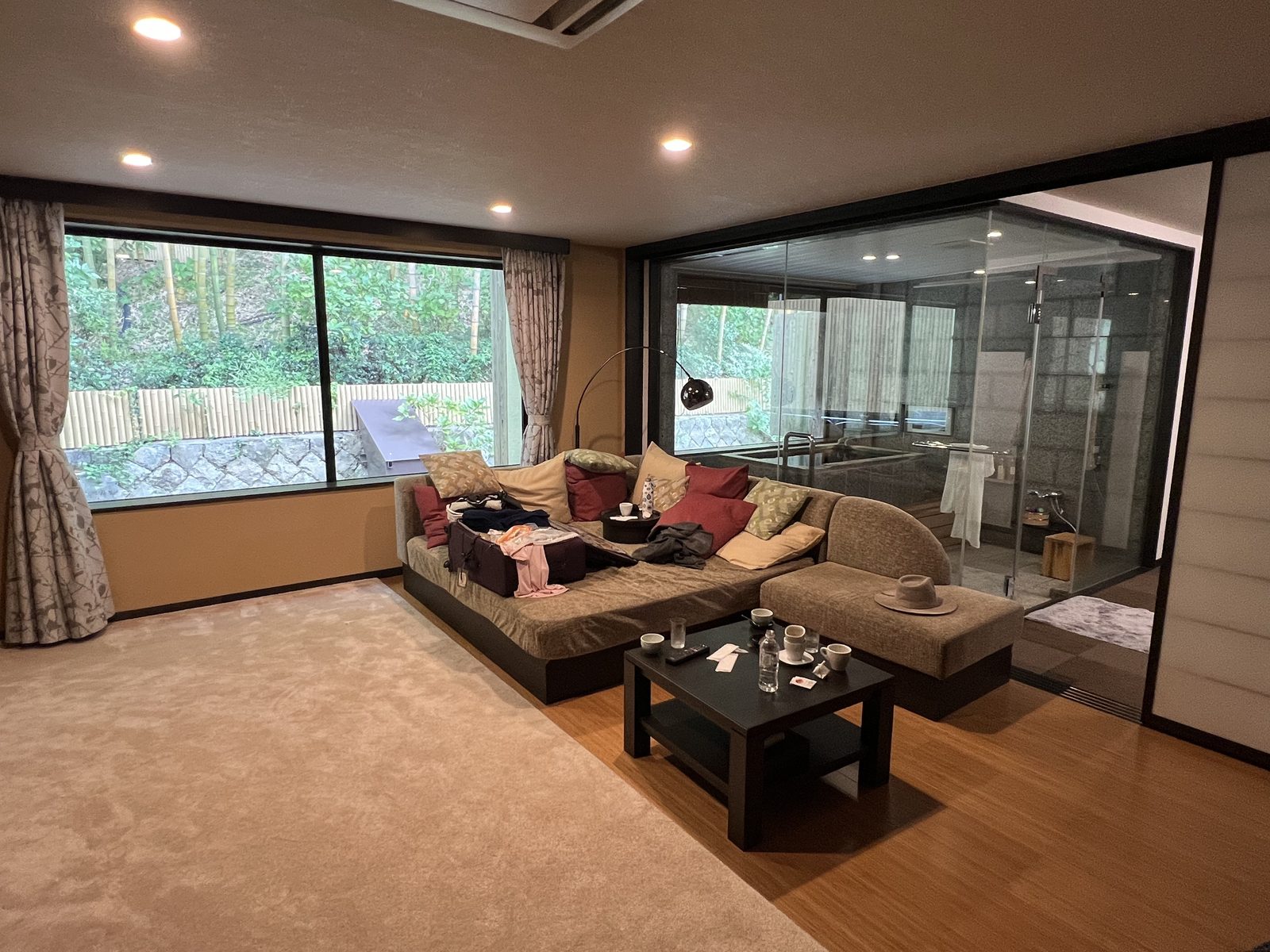
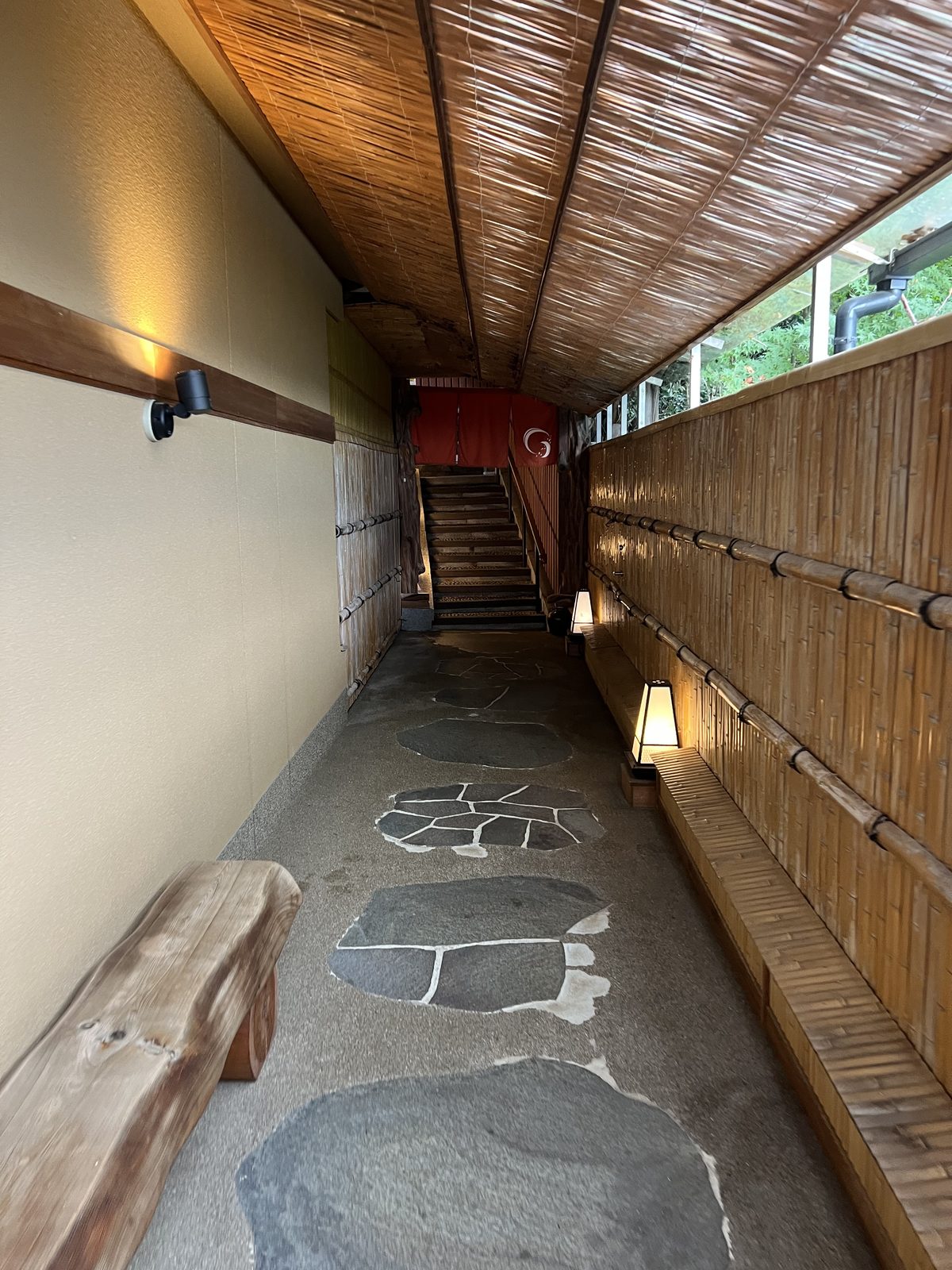
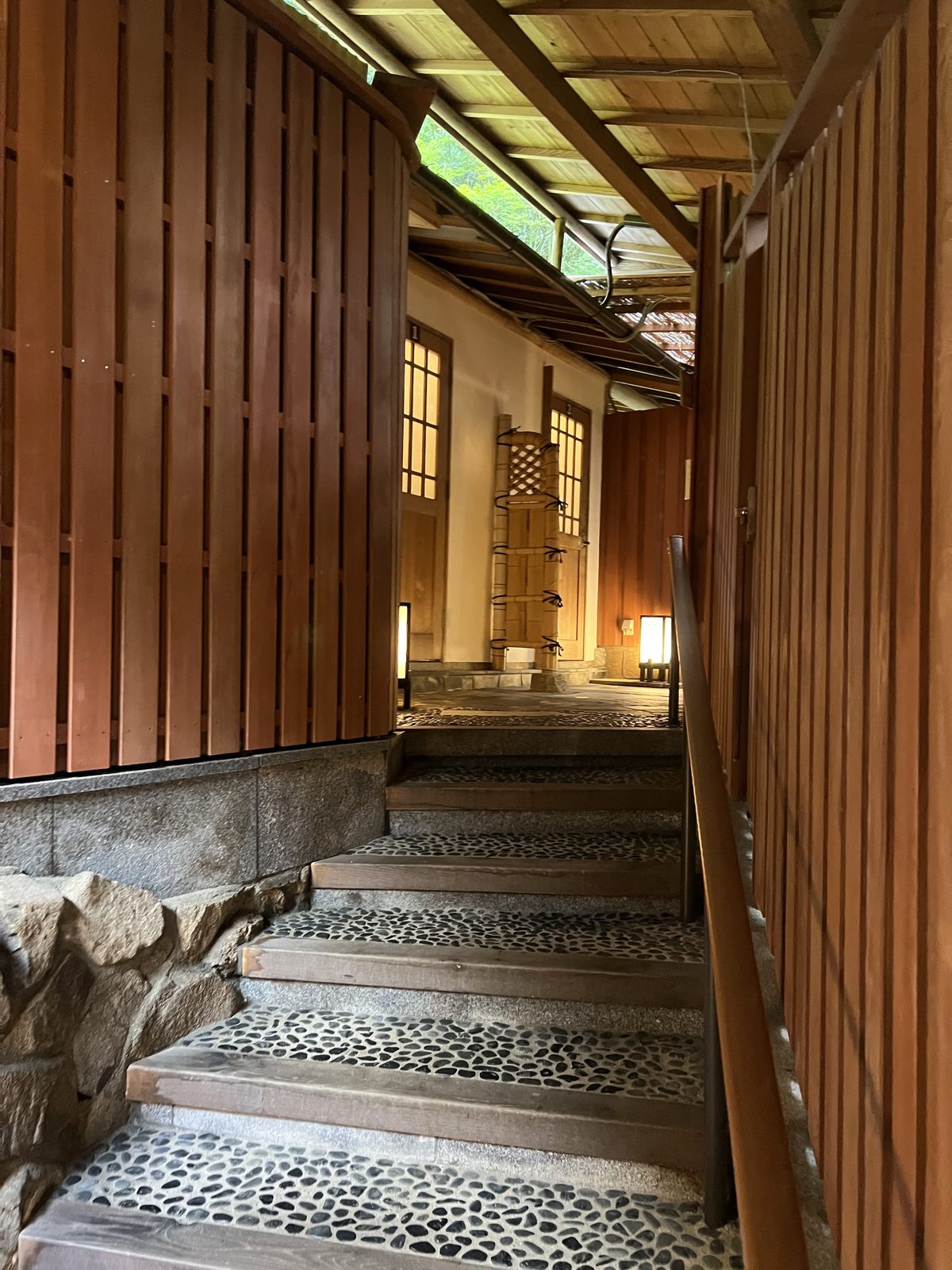
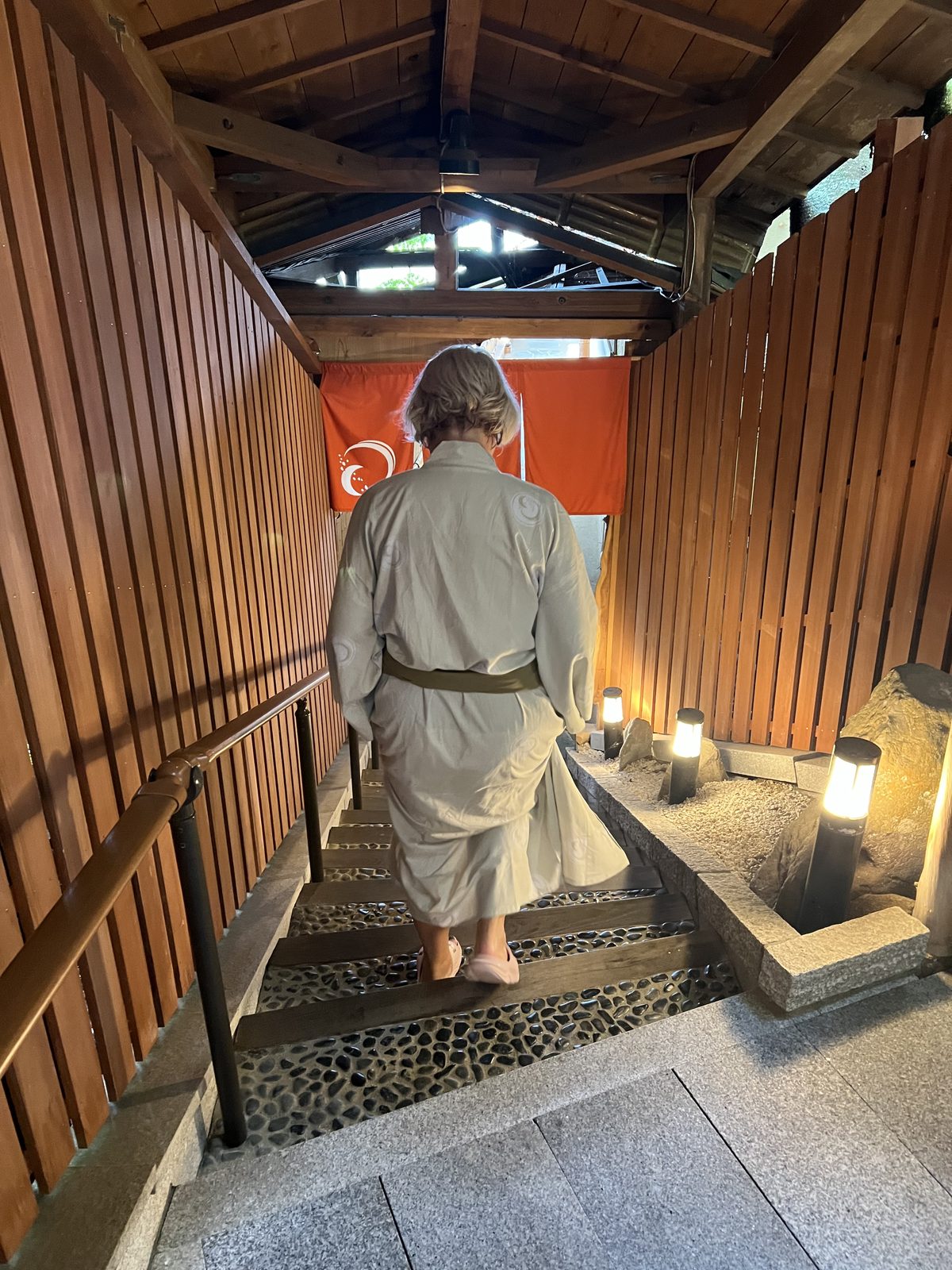
Our suite had a big sitting room with windows onto the bamboo and the trees. A bamboo-lined corridor led to the baths, and a staircase lit by lanterns led down to a red curtain at the bottom. Leigh Ann put on her yukata and went down those stairs like she'd been doing it all her life. The water in Arima's hot springs is a rusty golden brown, and it is as strange and wonderful as it sounds.
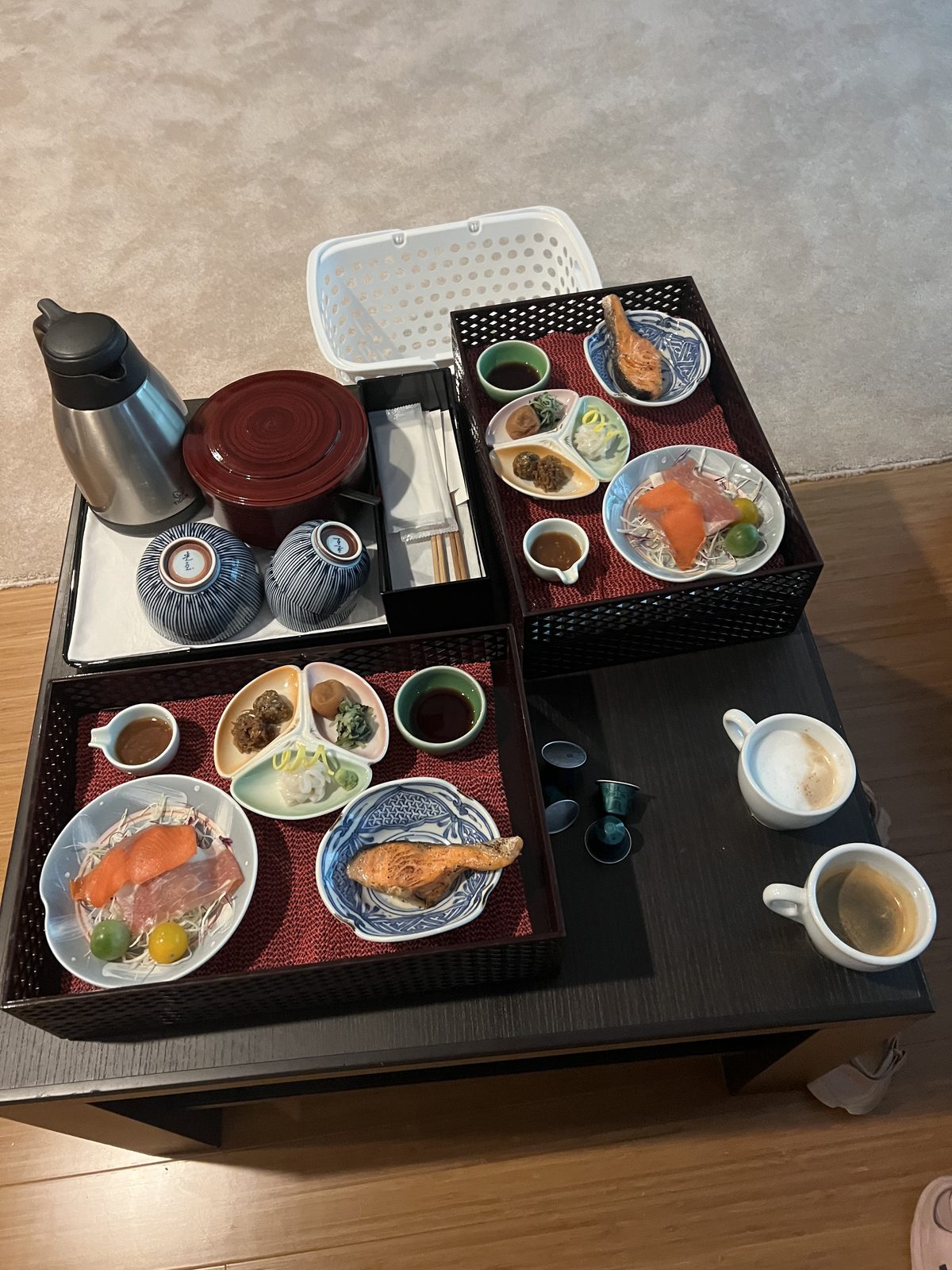
On the morning of September 20, breakfast came on trays: grilled fish, sashimi, little dishes of this and that, and coffee. It was almost too pretty to eat. Almost.
That evening we flew from Kobe Airport to Seoul on Korean Air. It is fair to say we are in love with Japan, and we will think of some excuse to come back. Ja mata ne, Nihon. Thank you for the hospitality.
A few tips if you go: a ryokan is worth at least two nights, so you have time to soak, wander and do nothing at all. Ask whether yours runs a shuttle from the station. And take the baths slowly, because you are not in a hurry.
Next stop: Seoul. ♨️