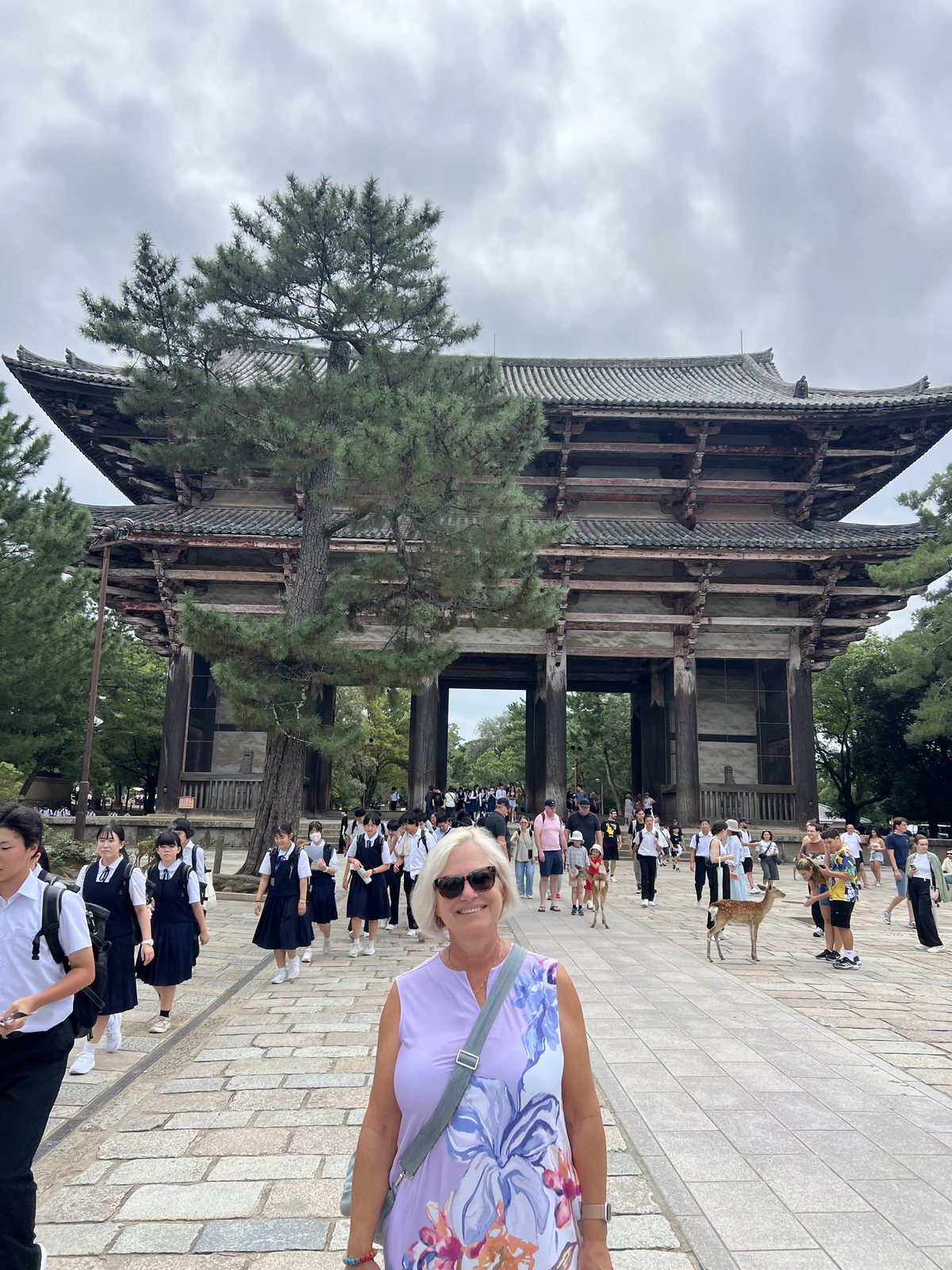
Osaka made a perfect base for day trips. On September 15 we took the train to Nara, where the deer wander around as if they own the place.
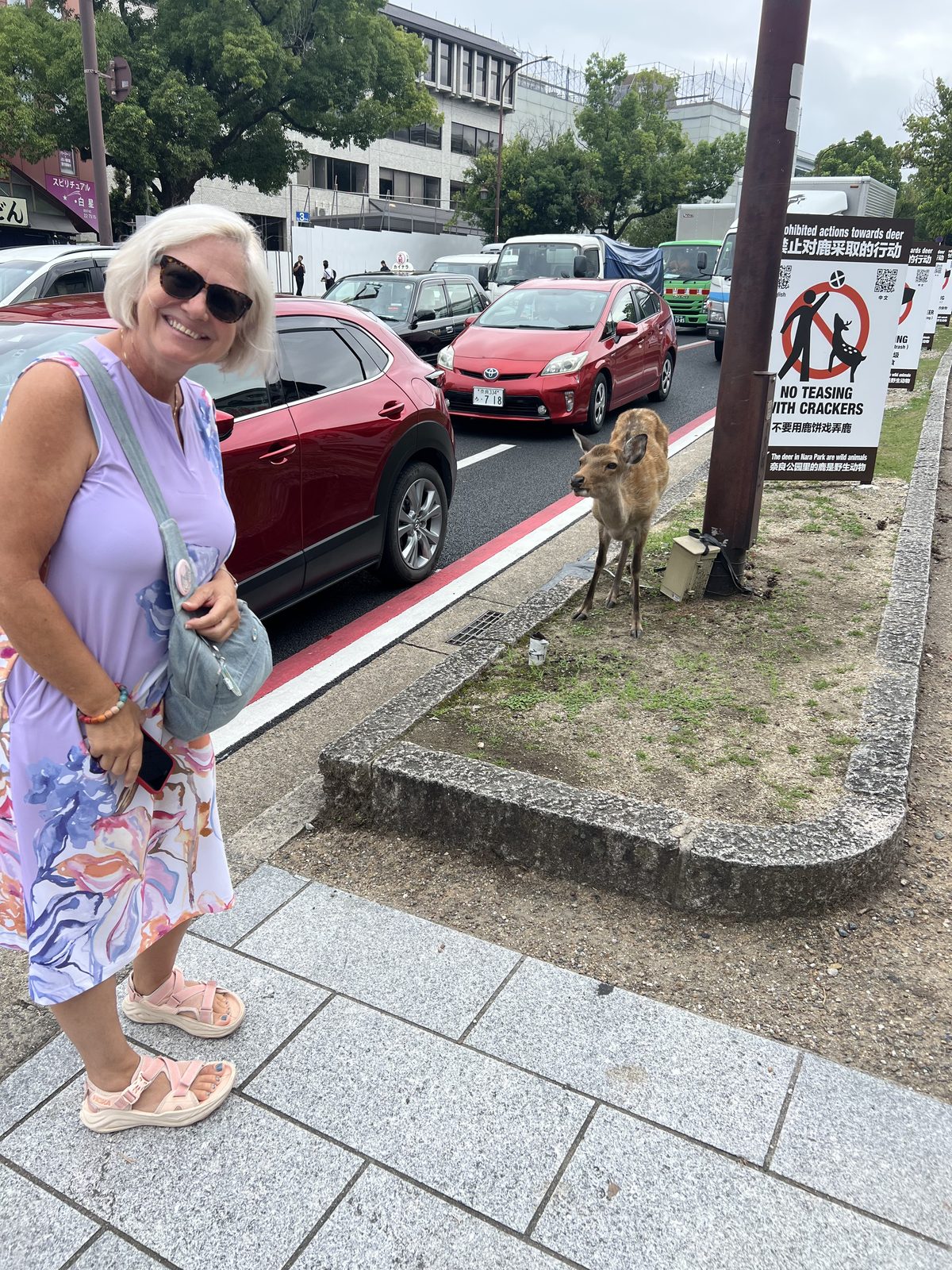
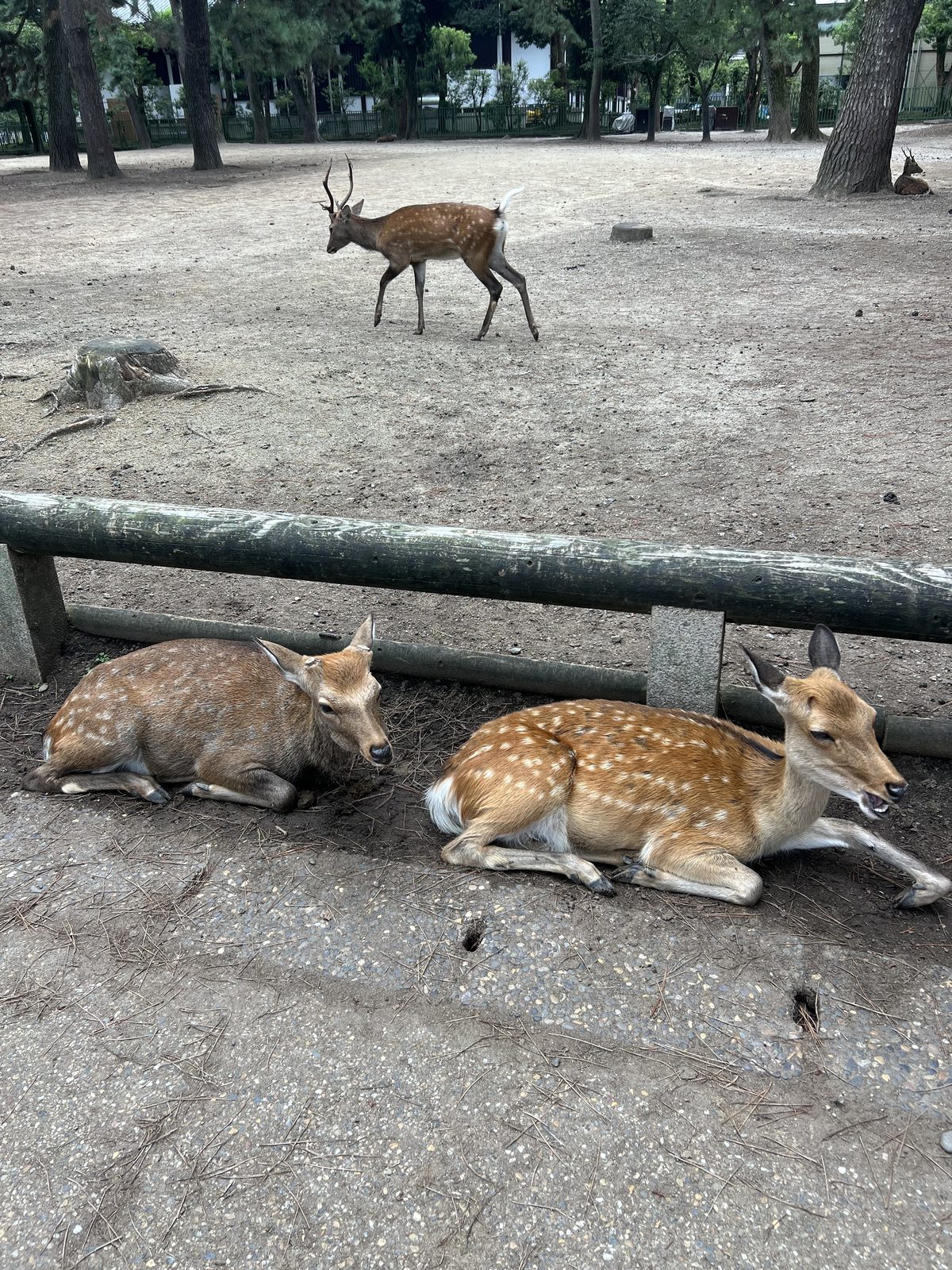
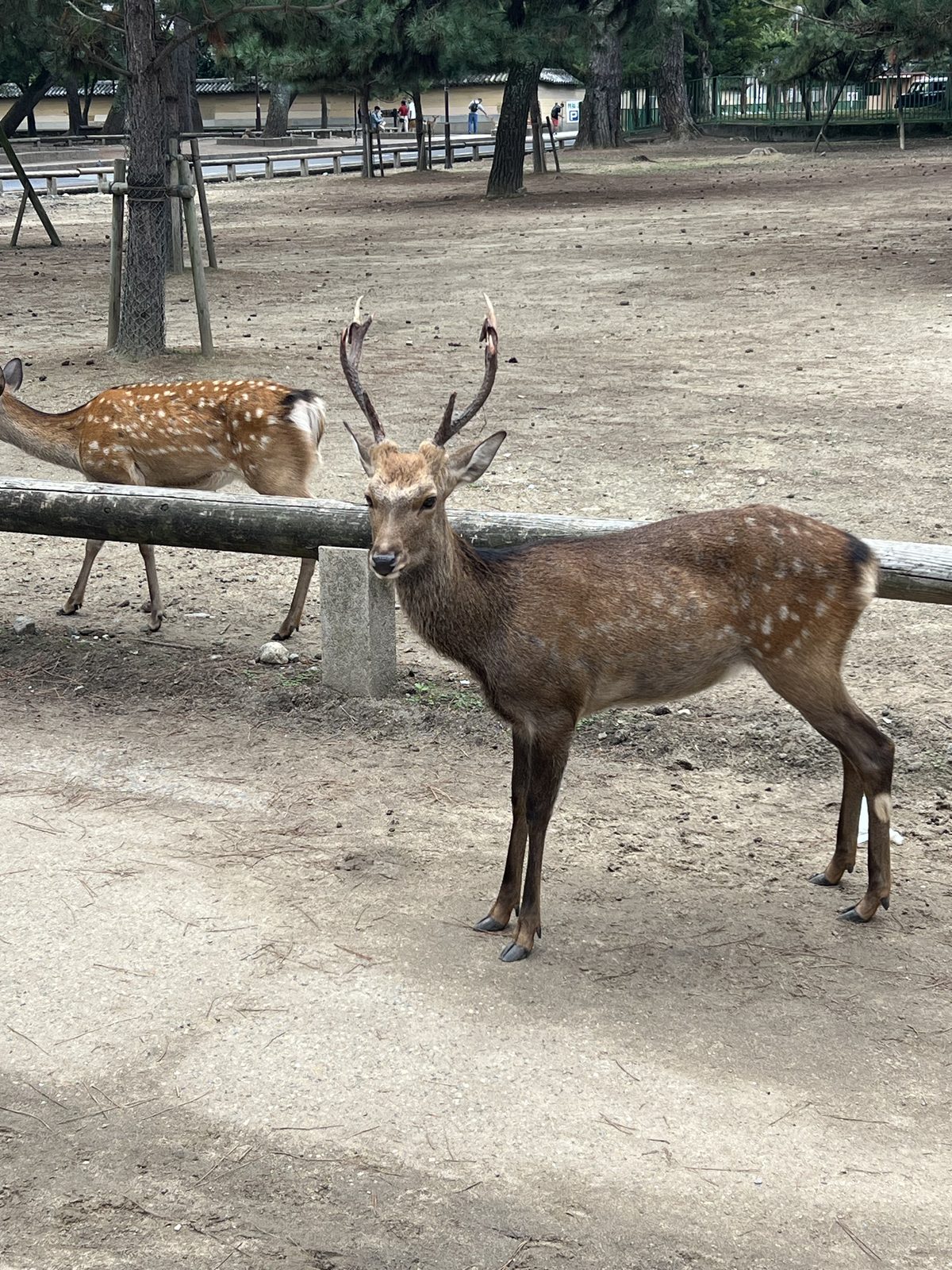
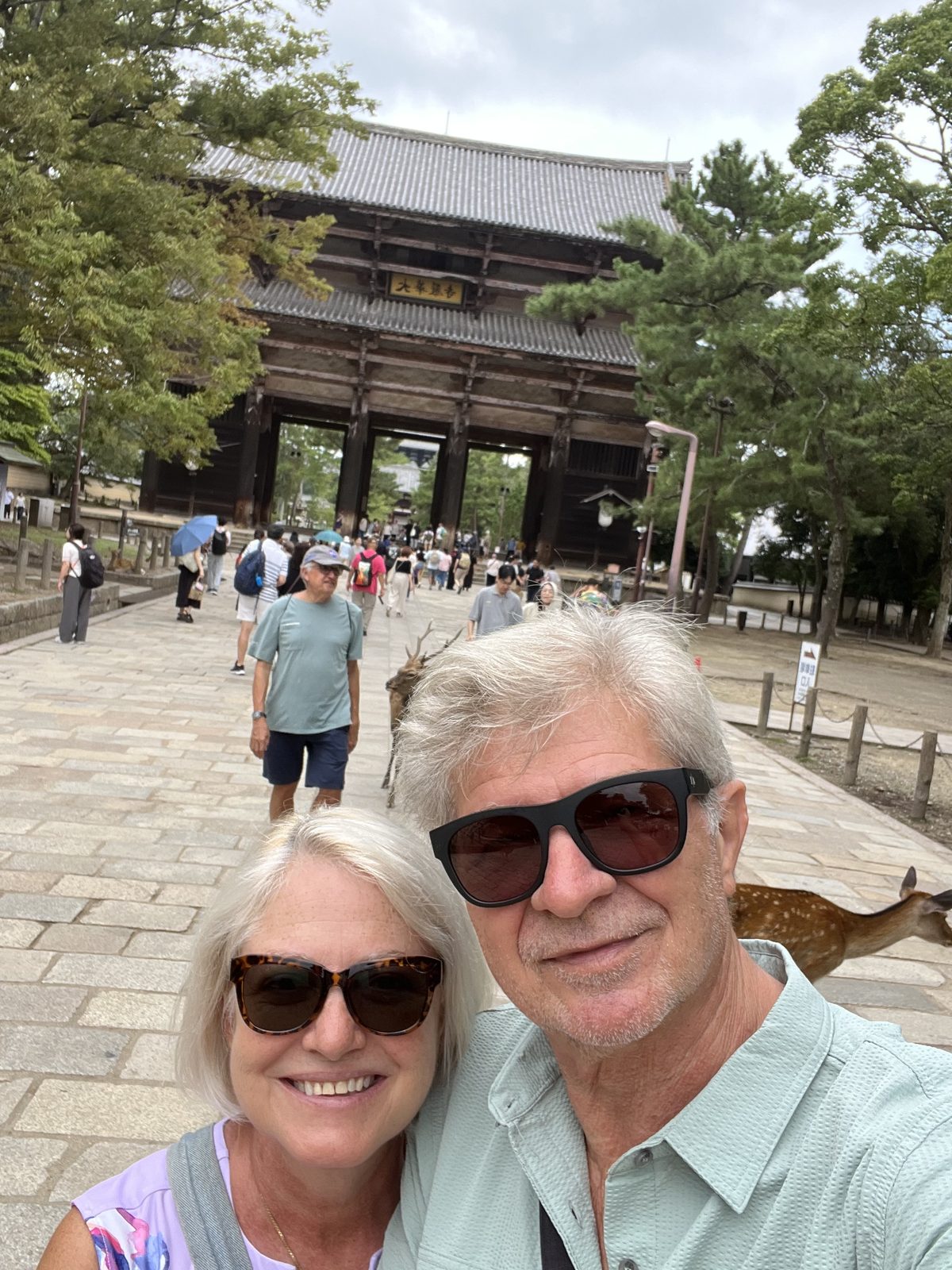
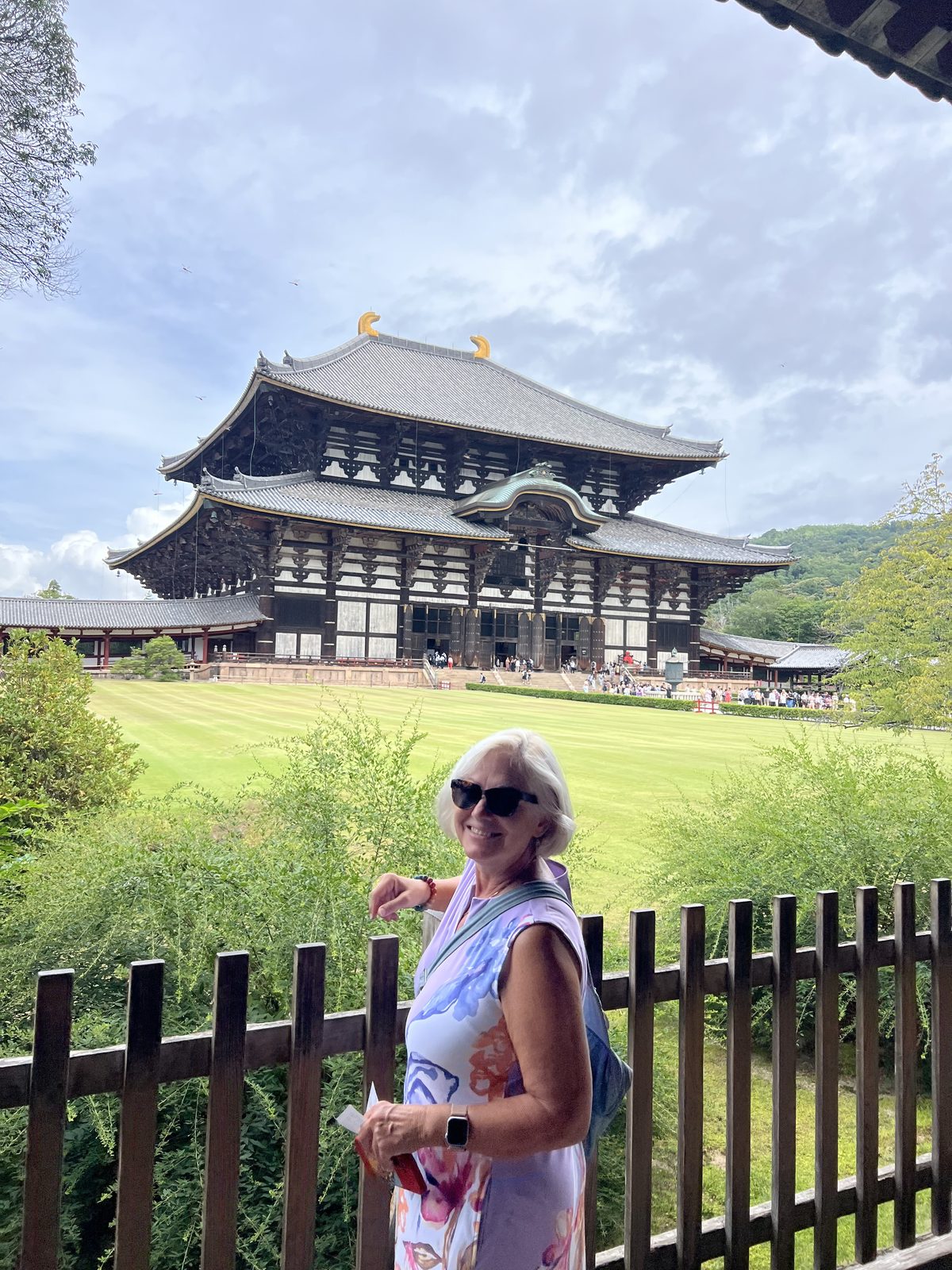
"Feed the deer in Nara, it'll be fun," said Google. As Leigh Ann told it, it was, in actual point of fact, terrifying. There were plenty of warnings. She photographed the signs because they were fun, and paid no attention to their content. The deer were everywhere: lounging by the road, resting under the trees, and one stag with a very serious set of antlers. A young one walked right up and nuzzled her hand in front of the great wooden gate. "I nearly died," she wrote, "and now I'm sure I smell faintly of deer wee. Oh, Deer."
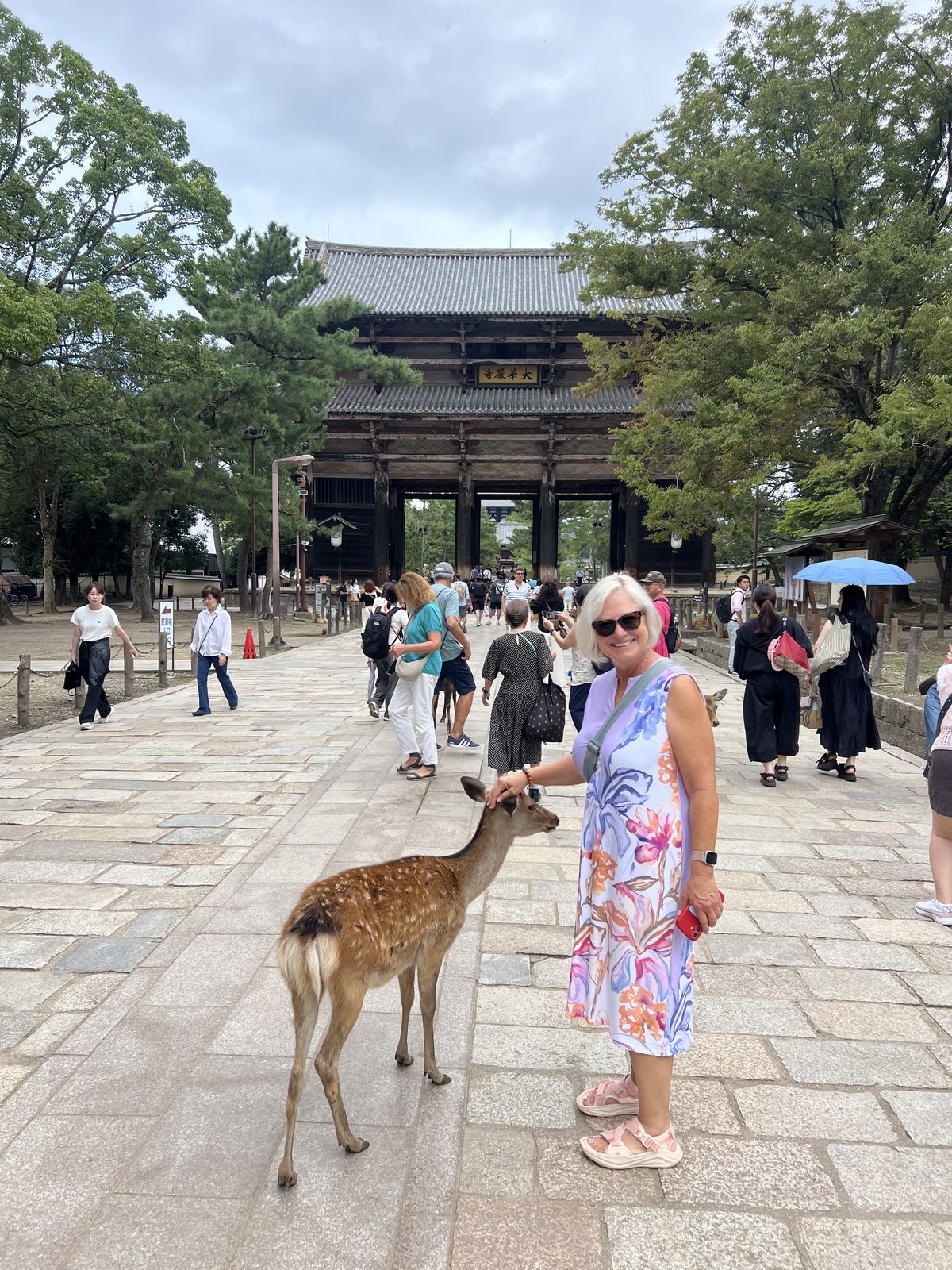
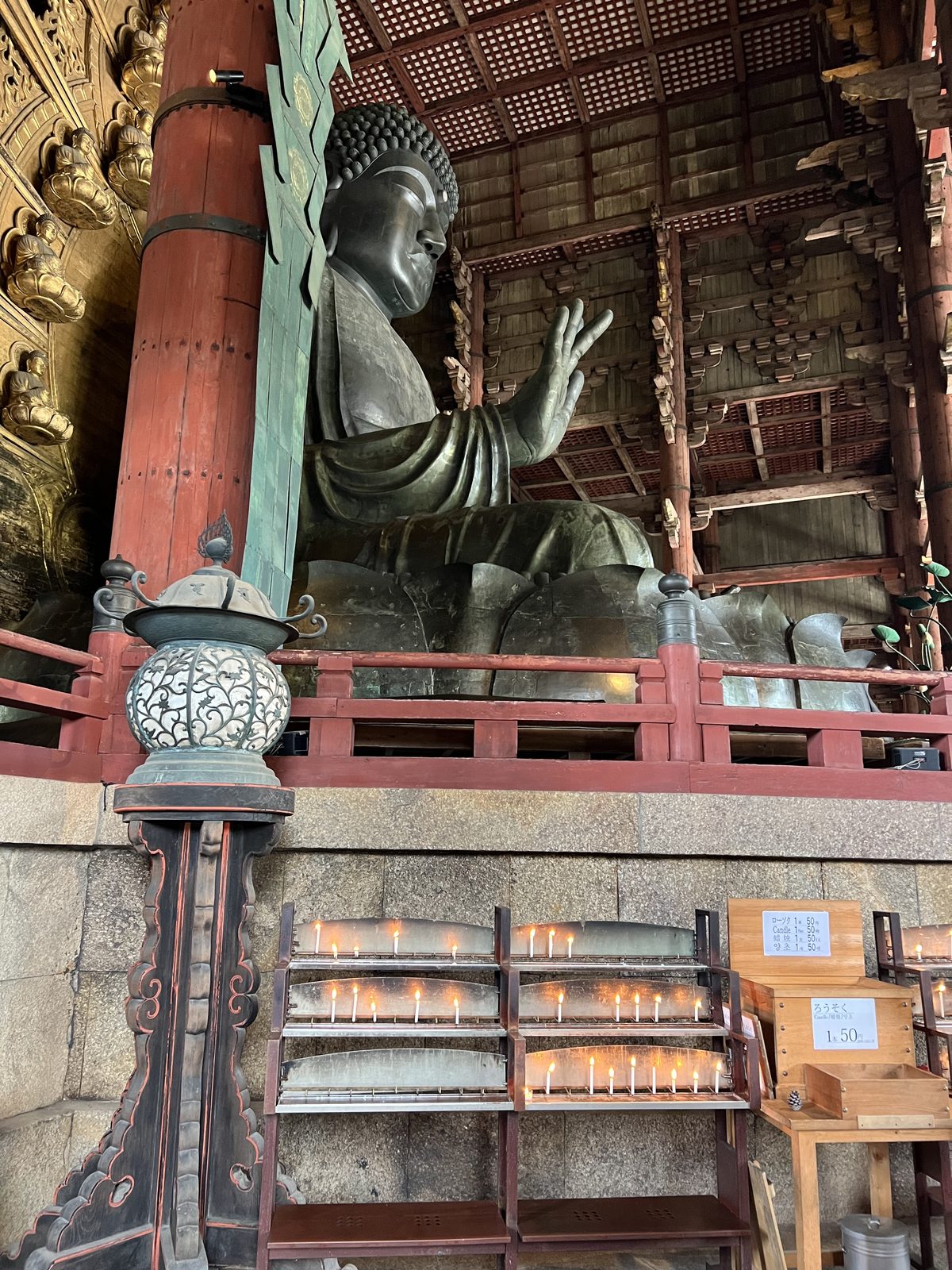
The gate leads into Todai-ji, whose great hall is one of the largest wooden buildings in the world. Inside sits a giant bronze Buddha. We stood on the lawn looking at the hall, then went in to see him. Everything about the place is big, and the crowds of school groups in uniform made it feel like a festival.
Nara is also famous for grilled eel, so we sat down to lunch in a very traditional restaurant. We sat on the floor, and there was a variety of shoe changes to be done, even a special pair for the bathroom. It was a five-star lunch. Then we went back to Osaka for a drizzly evening.
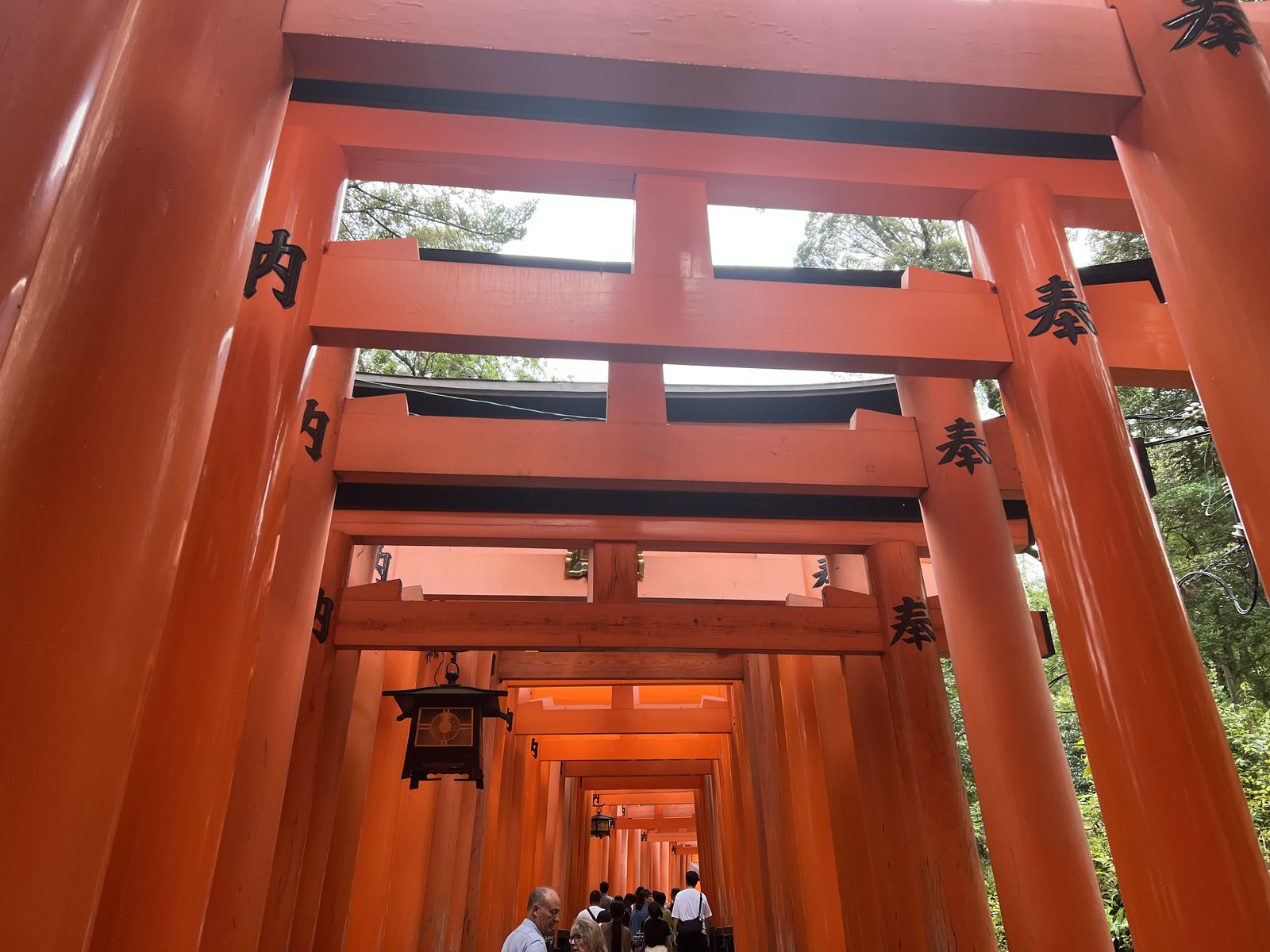
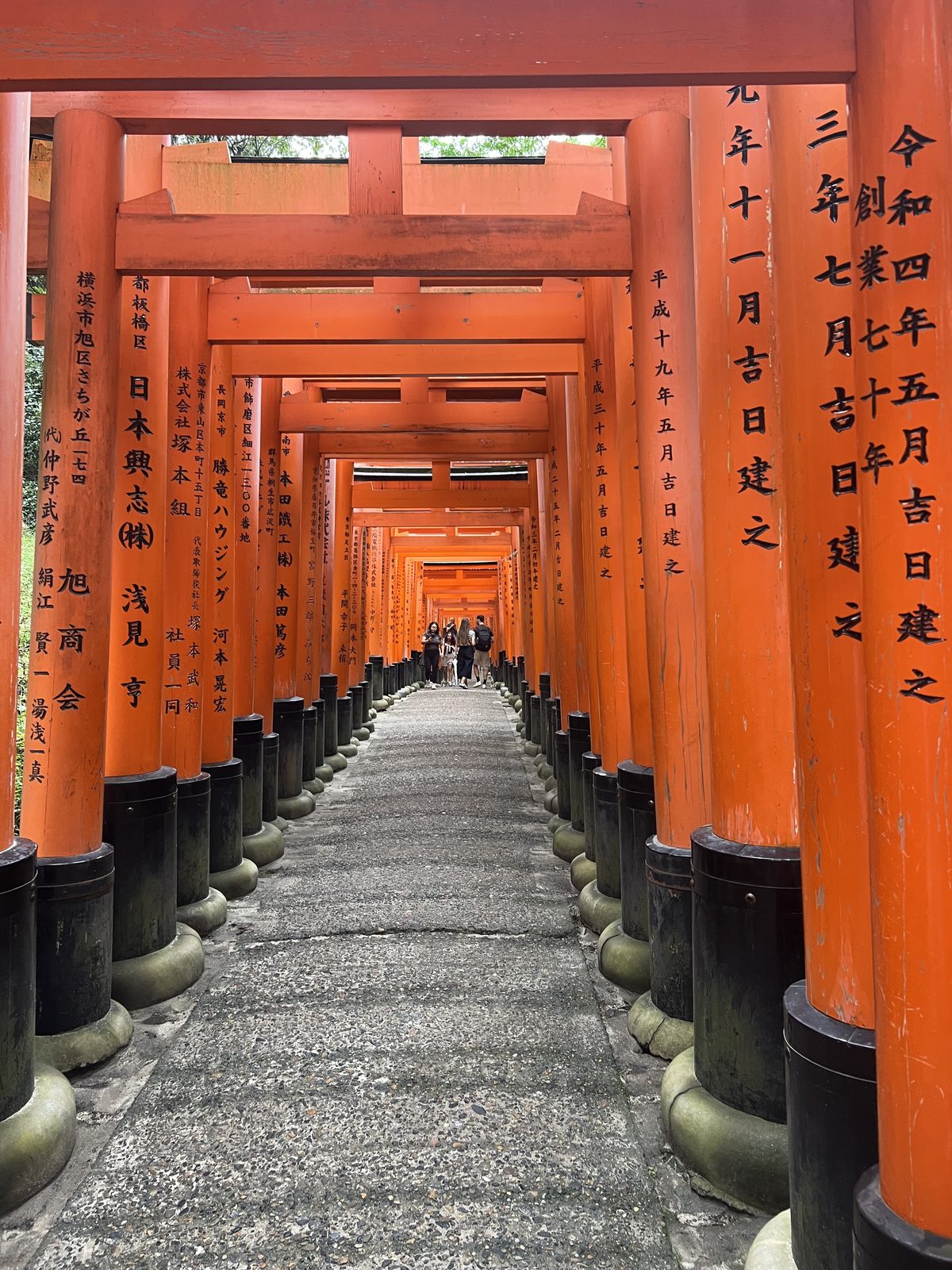
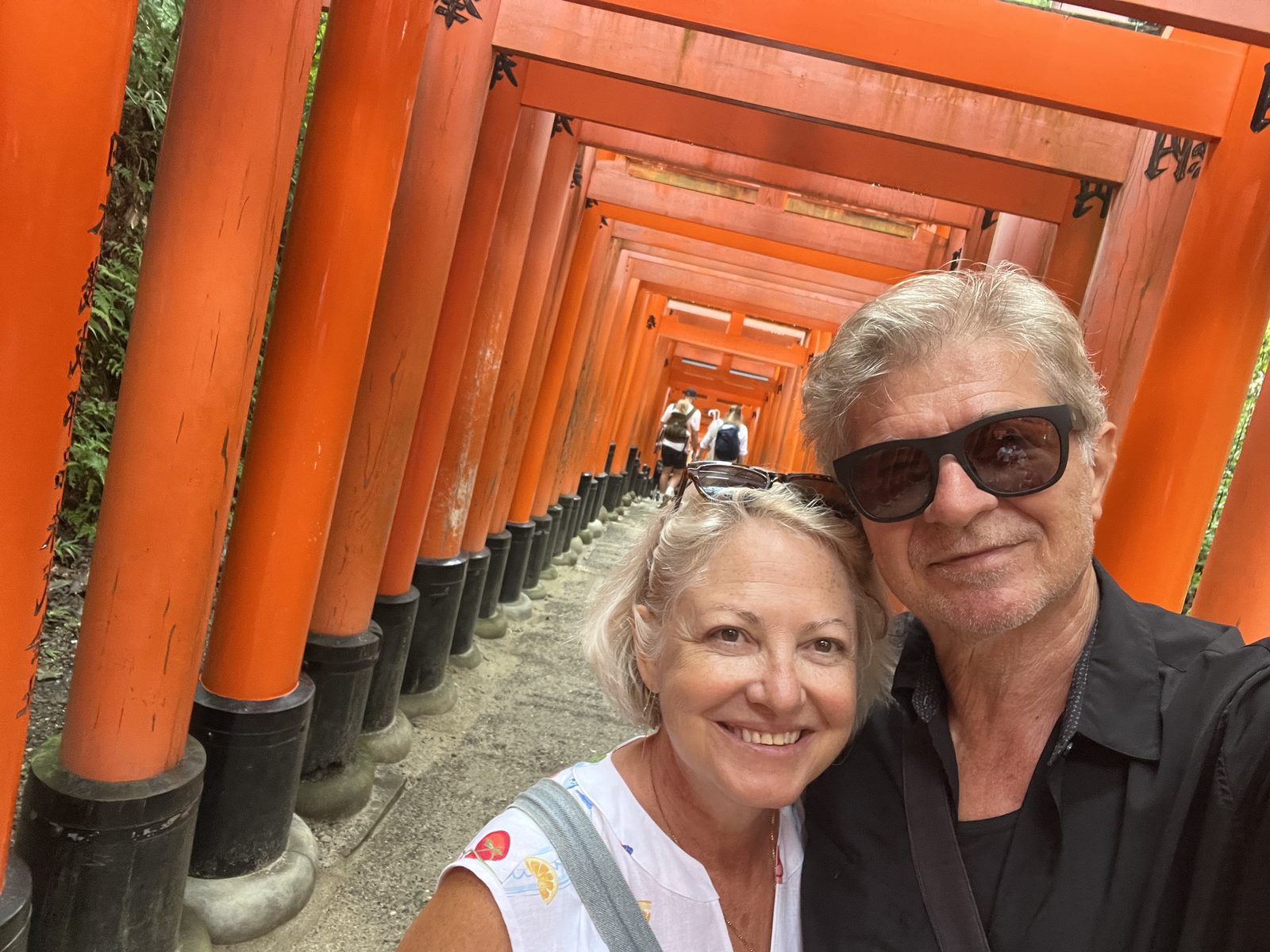
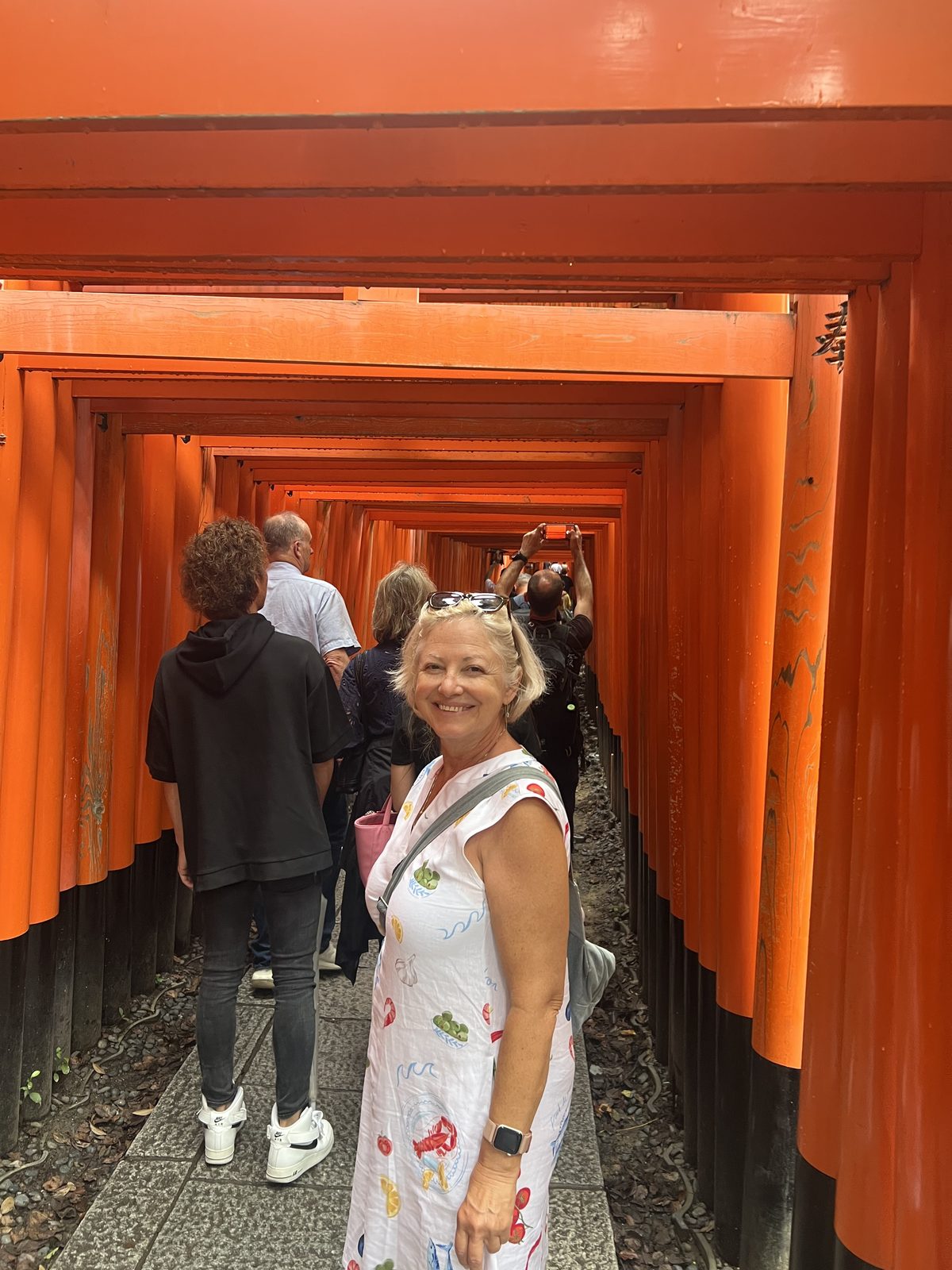
On September 16 we went back out, this time to Kyoto, and started early at Fushimi Inari, the shrine with thousands of bright red torii gates winding up the hillside. We got there around ten and it was already busy, but the gates are so tall and so close together that you still feel like you've stepped into another world. Each one has black writing on it, and I'm told it names the person or company that gave it.
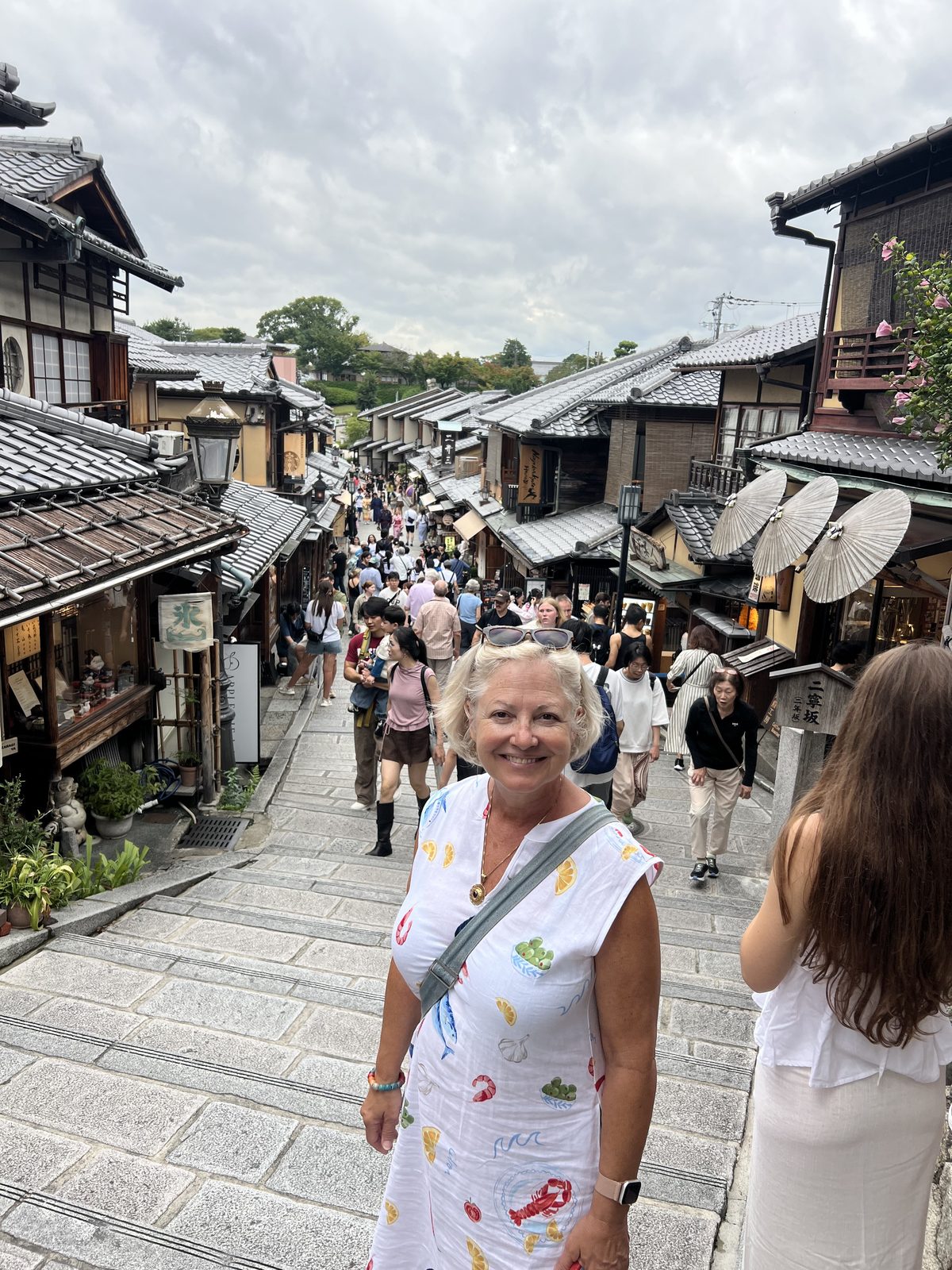
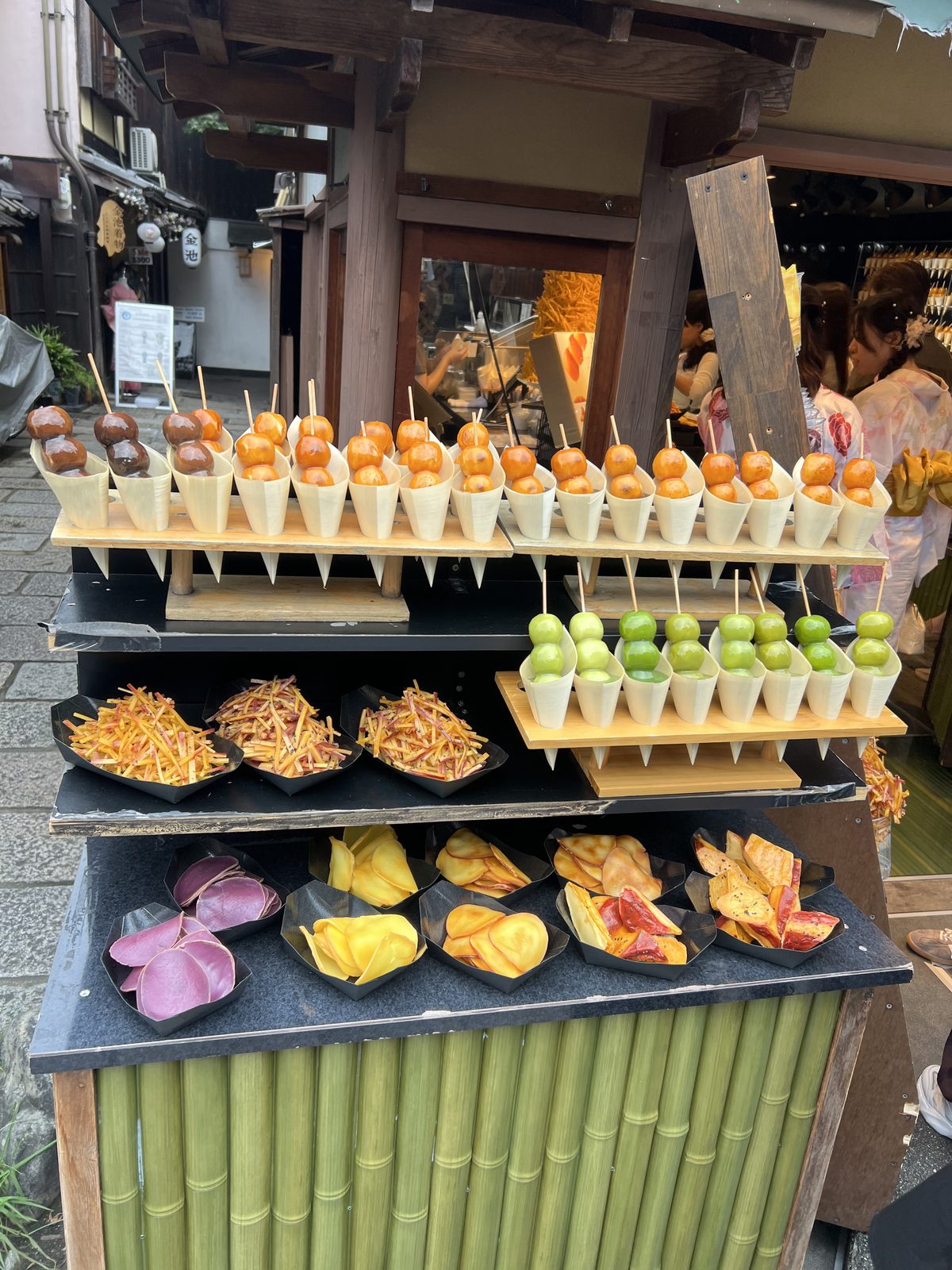
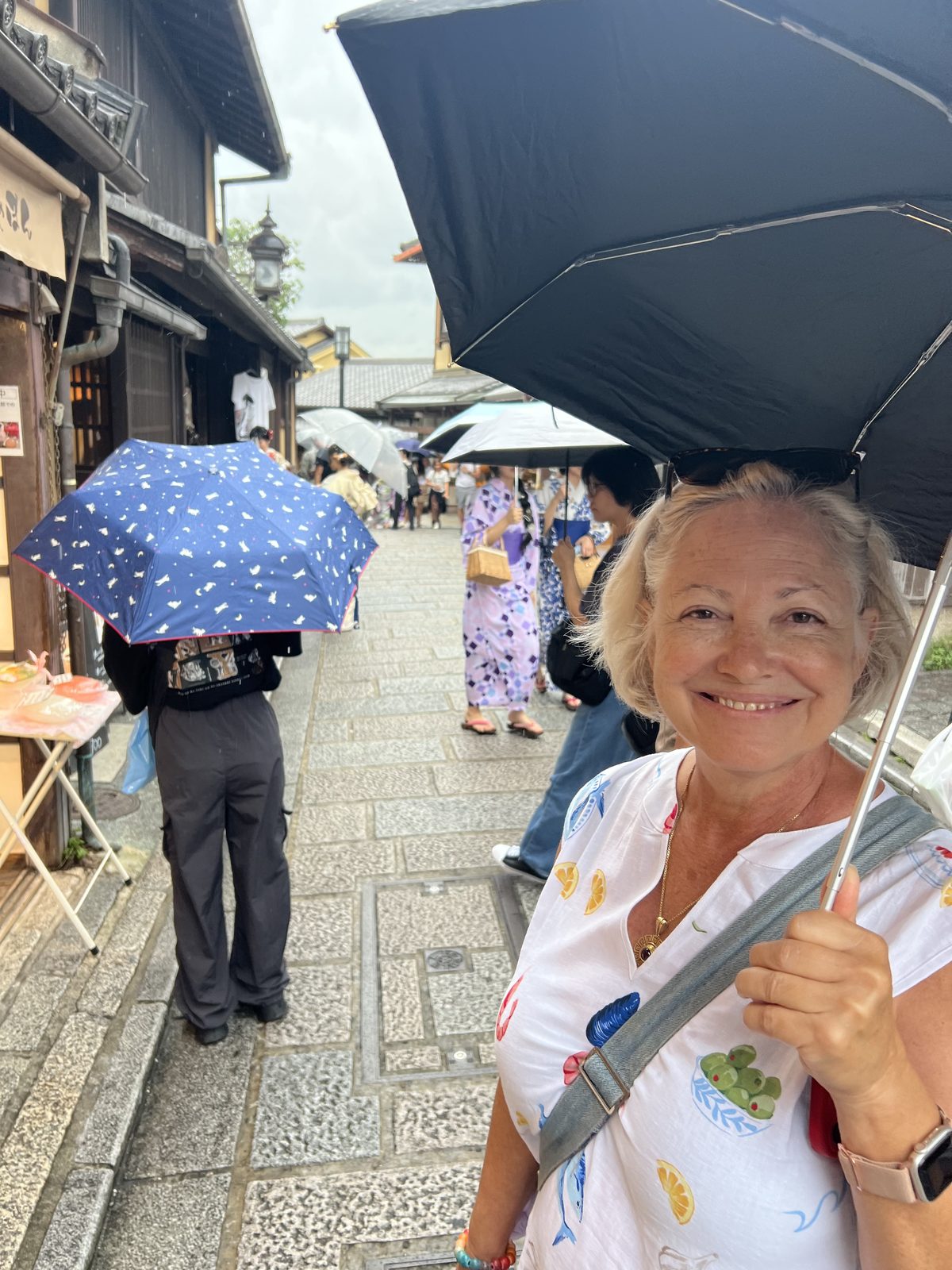
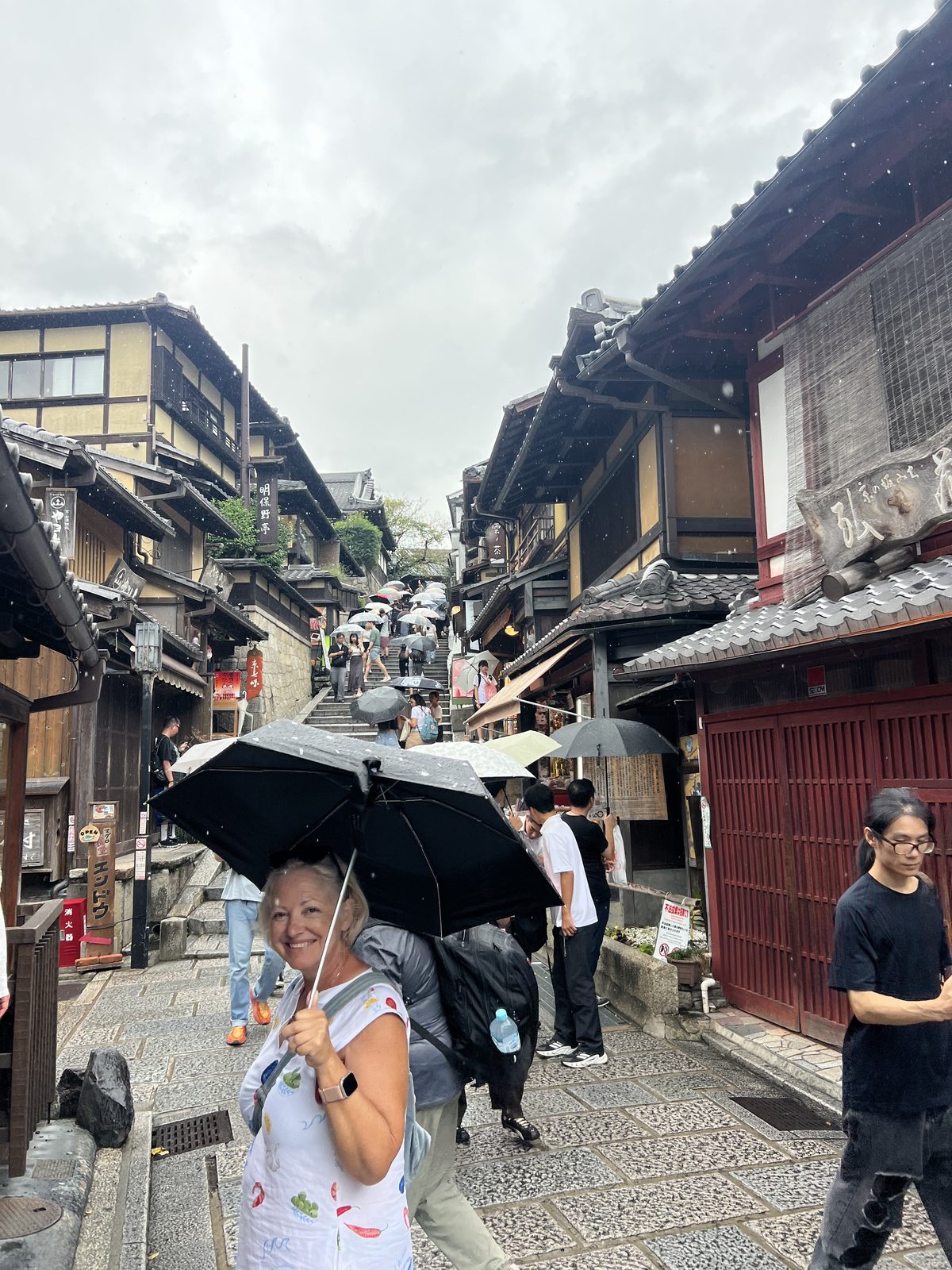
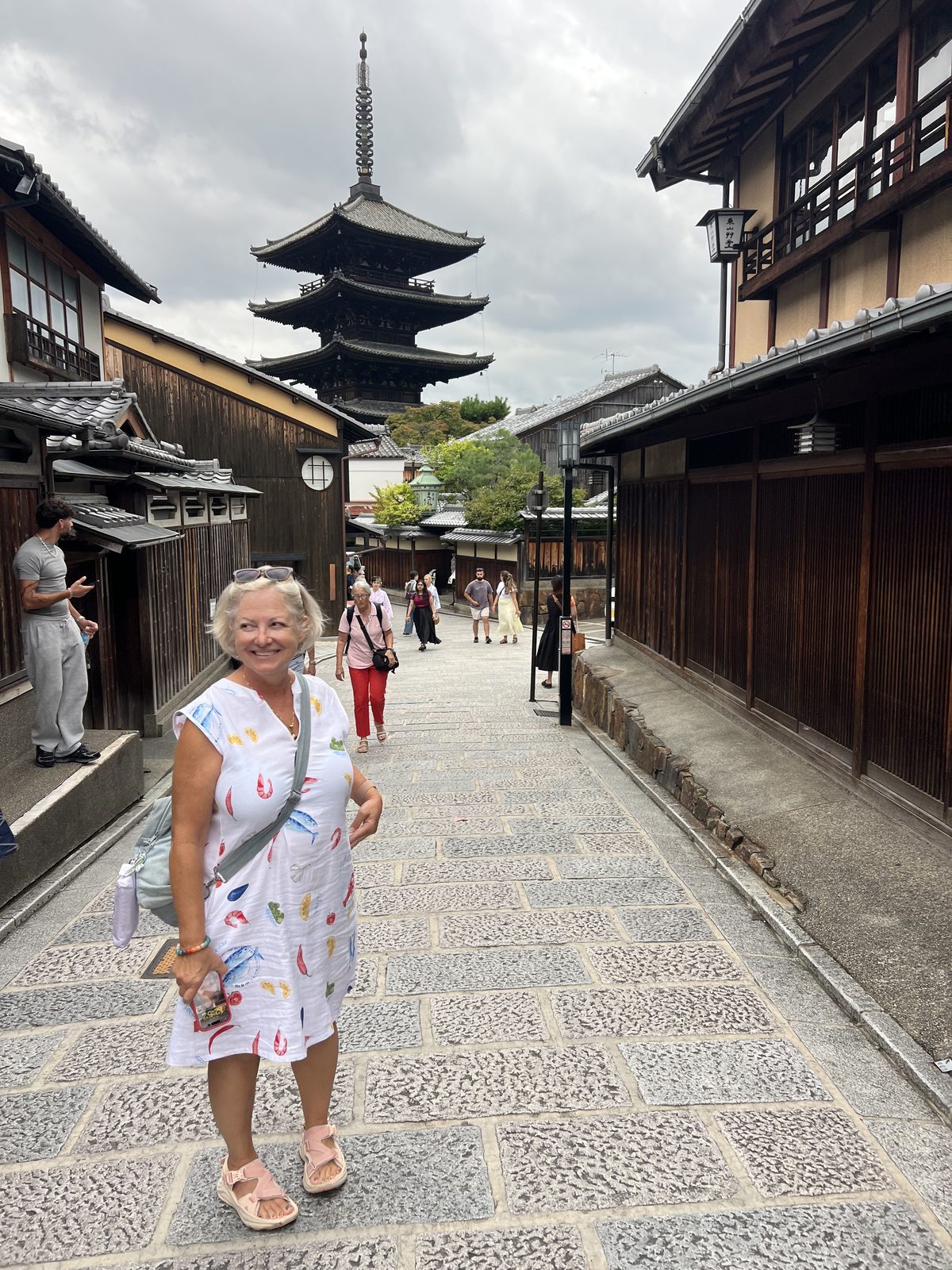
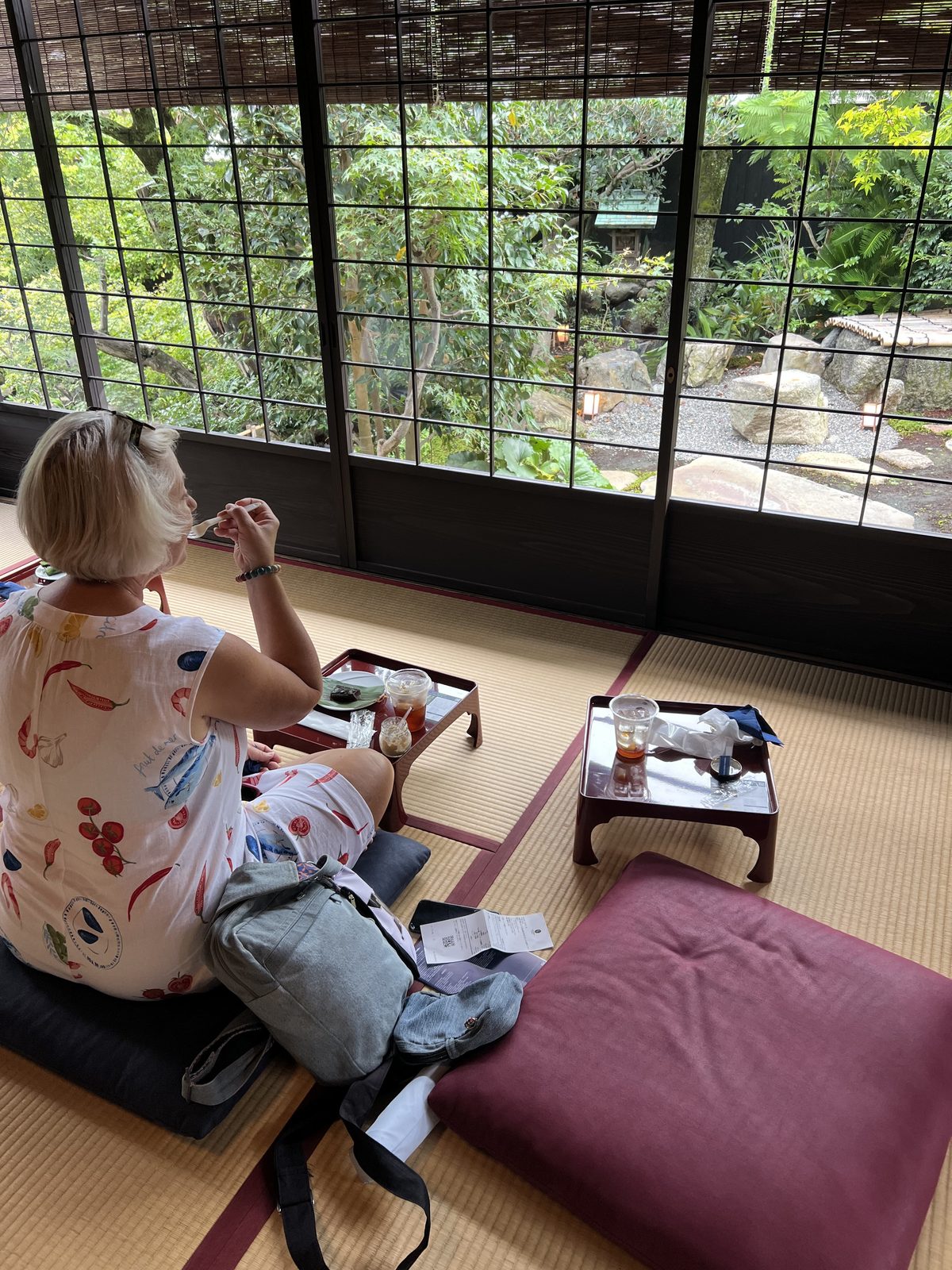
By midday it was raining, so we headed to the old wooden streets near a pagoda. We went up and down stone lanes lined with old shops, past stalls selling candied fruit and snacks, under umbrellas of every color. Leigh Ann found a tatami tea room that looked out on a tiny garden, and we sat there for a while, listening to the rain.
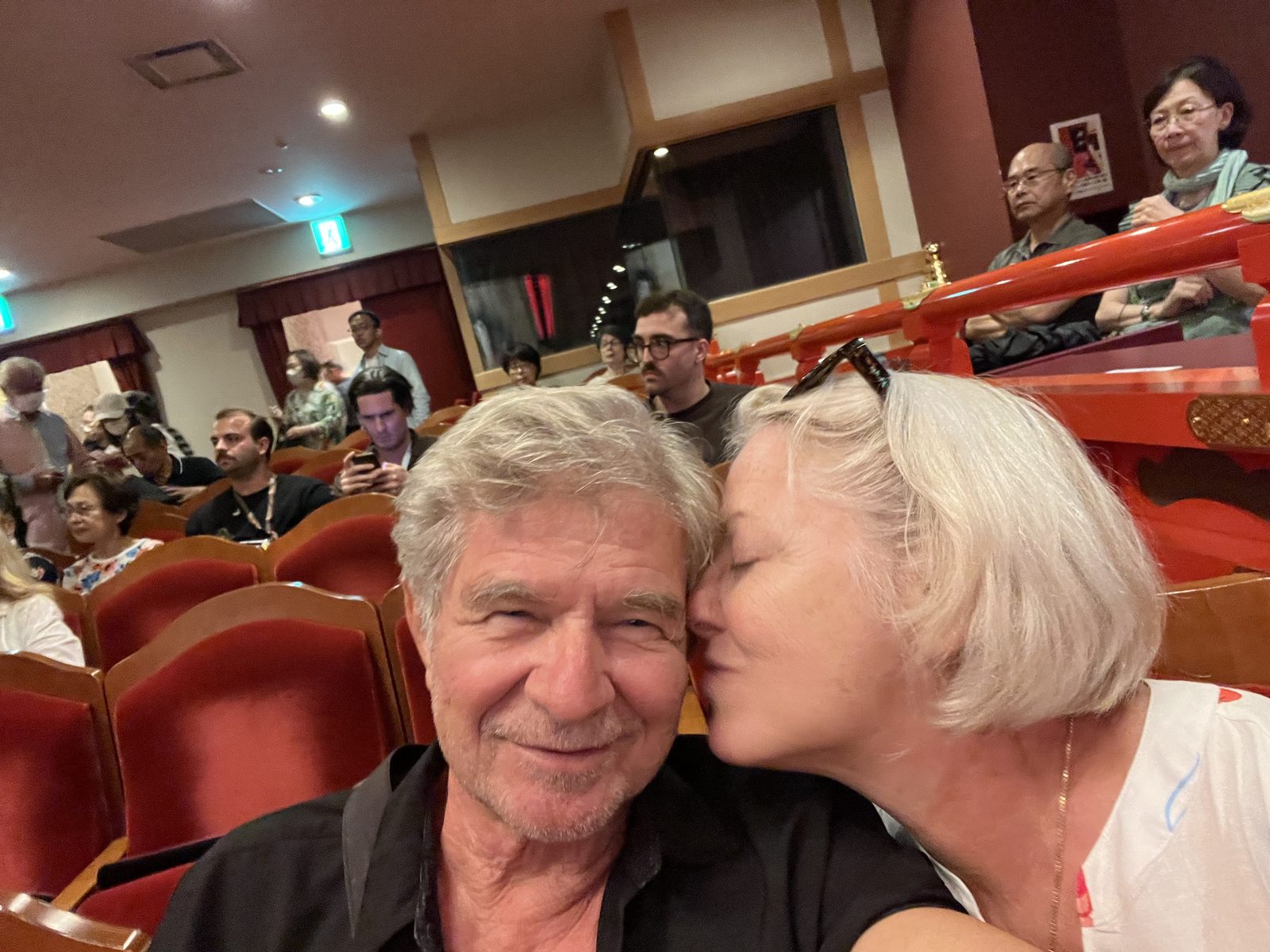
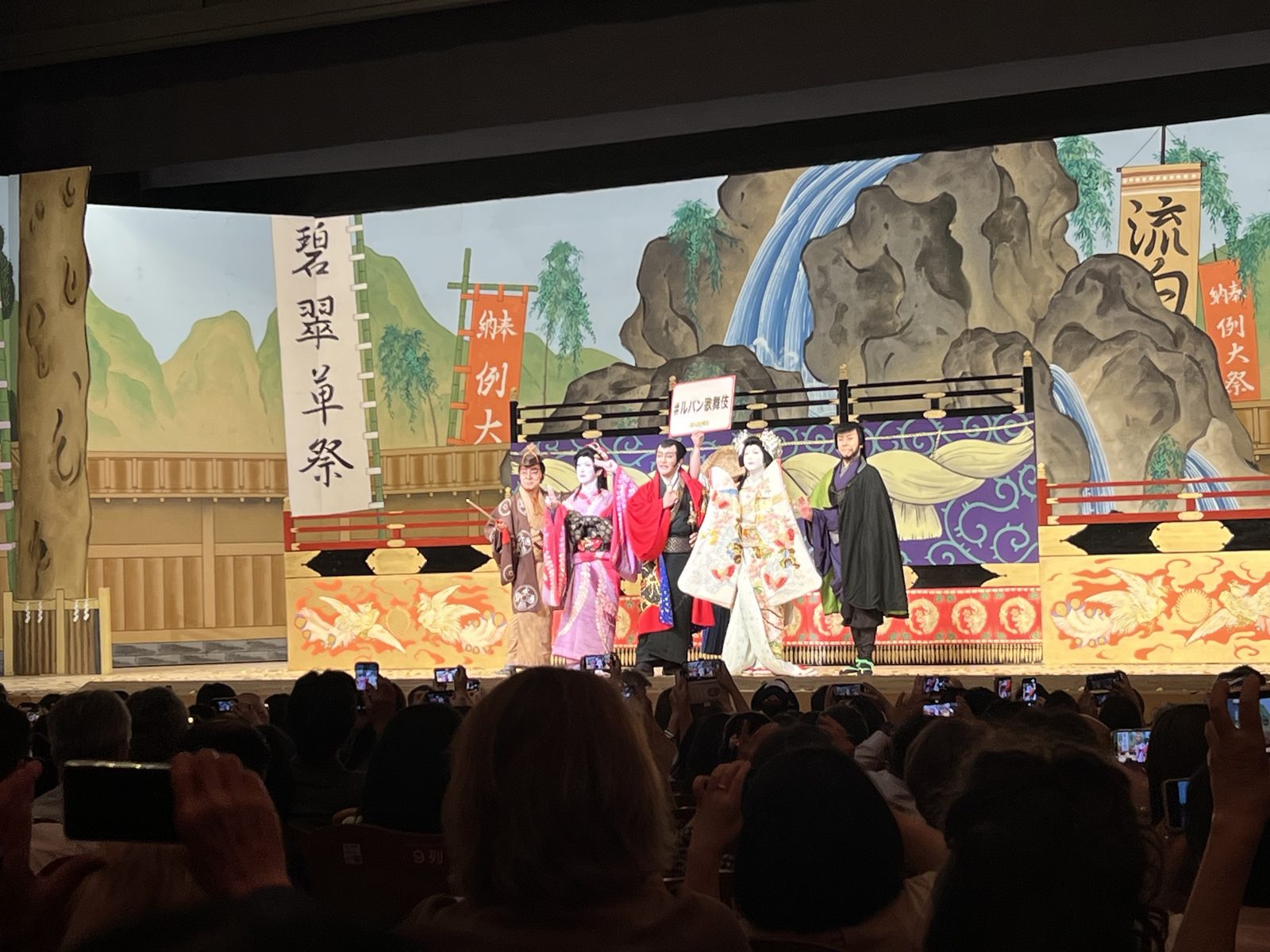
In the evening we went to one kabuki show, at the Minamiza Theater in Gion. The piece was Lupin III, a "new" kabuki work, which is to say it dates from the 1860s or so, as opposed to traditional kabuki from the 1600s. Leigh Ann called it Japanese Gilbert and Sullivan rather than Japanese Shakespeare, and it was magnificent. It started at four, with a half-hour break at 4:30 so everyone could buy a show-branded bento box or branded macarons, then ran for a punishing hour and a half, then a twenty-minute break, and ended with the biggest curtain call production she had ever seen. Painted scenery, colorful robes, a theater full of phones held up in the air. A really magical evening, in a charming town, in an enchanted theater.
A few tips if you go: get to Fushimi Inari early, and wear shoes you can walk in. In Nara, actually read the deer warning signs, and keep your snacks out of sight. Bring an umbrella to Kyoto in September. And if you can, see a kabuki show at the Minamiza. One is enough to remember.
Next stop: Kobe and a ryokan in the hills. 🦌